 Maple
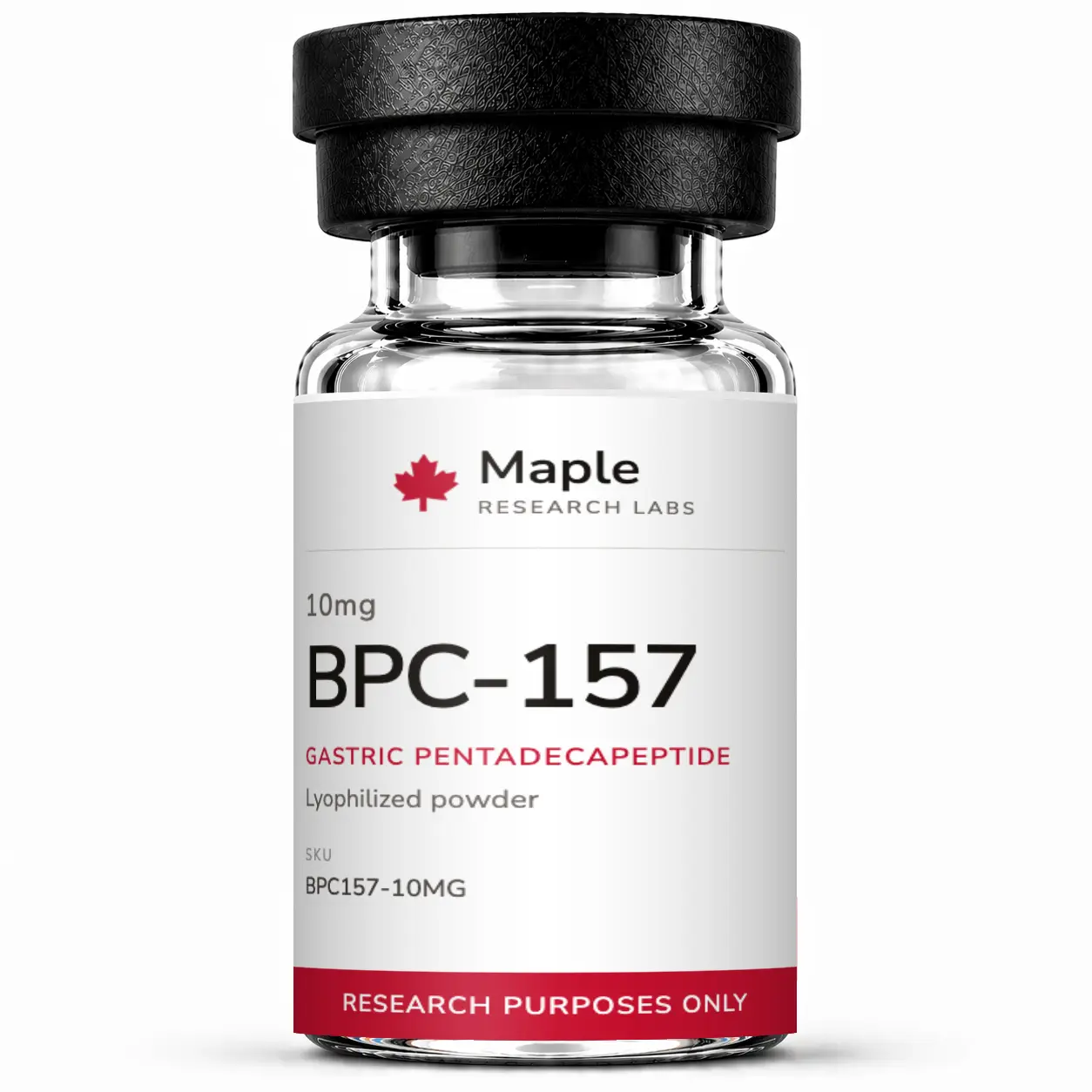
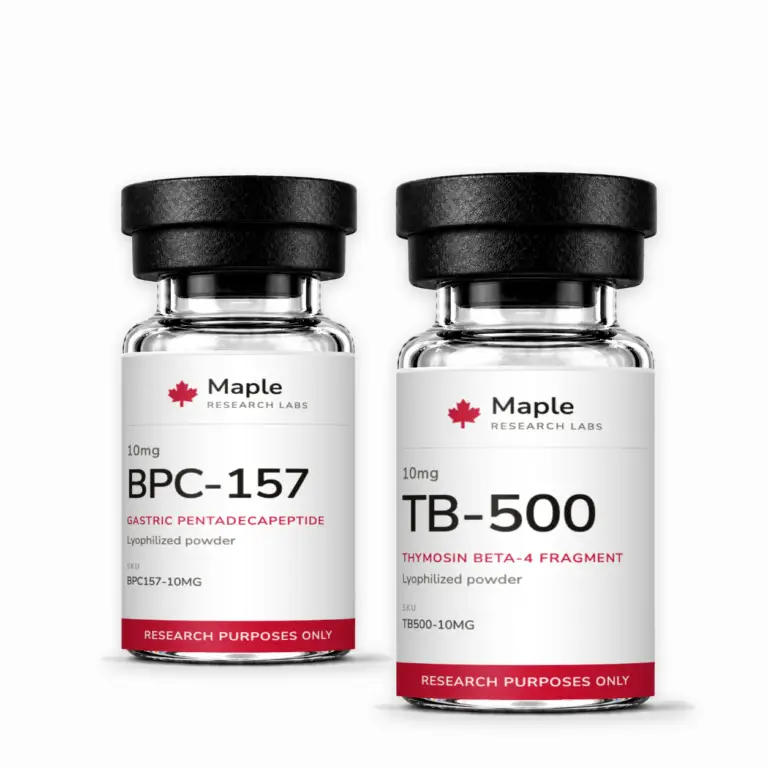
BPC-157 peptide Canada: a synthetic pentadecapeptide derived from human gastric juice protein BPC (Body Protection Compound-157). This research-grade compound is available from Maple Research Labs with a published 99.41% HPLC-UV result for a tested sample and the third-party Certificate of Analysis (COA) linked on this page.
Product Specifications
- CAS Number: 137525-51-0
- Molecular Formula: C62H98N16O22
- Molecular Weight: 1419.53 g/mol
- Purity: 99.41% (HPLC-UV, tested sample)
- Form: Lyophilized powder
- Quantity: 10mg per vial
BPC-157 Peptide Canada Research Summary
BPC-157 (Body Protection Compound-157) is a synthetic pentadecapeptide derived from a partial sequence of human gastric juice protein BPC. It consists of 15 amino acids and is stable in human gastric juice, a characteristic that distinguishes it from many other bioactive peptides in preclinical research. The peptide’s sequence (Gly-Glu-Pro-Pro-Pro-Gly-Lys-Pro-Ala-Asp-Asp-Ala-Gly-Leu-Val) was first characterized by research groups investigating cytoprotective properties of gastric juice-derived compounds.
Research has demonstrated involvement of the NO system, growth factor modulation (including VEGF, EGF), and FAK-paxillin signaling pathways.
Mechanism of Action Research
At the molecular level, published research has identified several signaling pathways potentially involved in the biological activities observed in preclinical BPC-157 peptide studies. Key areas of investigation include modulation of the nitric oxide (NO) system through interaction with NOS isoforms, upregulation of growth factor receptors (including VEGFR2 and EGF receptor systems), and engagement of the FAK-paxillin signaling cascade associated with cell migration and adhesion.
In vitro studies using endothelial cell models have demonstrated effects on fibroblast migration rates, endothelial cell tube formation in angiogenesis assays, and cytoprotective mechanisms in cell culture models exposed to oxidative and chemical stressors. These observations have contributed to ongoing research interest in the compound’s potential interactions with vascular endothelial growth factor pathways.
Preclinical Study Summary
Animal model investigations have explored BPC-157 across multiple tissue types and experimental injury models. Published peer-reviewed studies include research on transected Achilles tendons in rats, quadriceps muscle crush injury models, surgically-induced and chemically-induced gastrointestinal lesions, NSAID-induced mucosal damage models, and ligament transection recovery studies.
The peptide has been examined in over 100 published preclinical studies conducted by multiple independent research groups across several countries. Research has spanned gastrointestinal, musculoskeletal, and neurological model systems. BPC-157 is one of the more extensively characterized synthetic peptides in the published preclinical literature.
All published findings referenced here are based exclusively on animal models and in vitro systems. No completed clinical trials in human subjects have been reported in the peer-reviewed literature to date. Researchers should consult primary literature sources for full experimental protocols and outcomes.
References
BPC-157 Peptide Canada Quality Assurance
A 10mg sample of BPC-157 from Maple Research Labs was analysed by an independent third-party laboratory by HPLC-UV (report DBAV-BPC-10-051226, tested May 23, 2026). The Certificate of Analysis (COA) for that tested sample is linked on this product page and includes retention time data, purity percentage, measured fill accuracy against label claim. Maple Research Labs sources finished, labelled research reagents. We do not manufacture, fill or vial on site. Published sample results do not by themselves establish consistency across all shipments.
Storage and Handling
Store lyophilized BPC-157 peptide at -20C for long-term storage. Avoid repeated freeze-thaw cycles. Keep away from direct light and moisture. Handle with appropriate laboratory safety protocols.
Shipping
In-stock orders paid by 2 PM PT (Mon–Fri) ship the same business day, from BC with tracking.
Certificate of Analysis (COA)
| Testing Laboratory | Independent third-party laboratory |
| Report Number | DBAV-BPC-10-051226 |
| Purity (HPLC-UV) | 99.41% |
| Fill Accuracy | 102.9% (10.29mg measured / 10.00mg expected) |
| Date Tested | May 23, 2026 |
| Download COA | Download Full COA (PDF) |
For research purposes only. Not for human consumption. Not for diagnostic or therapeutic use.
In-stock orders paid by 2 PM PT (Mon–Fri) ship the same business day, from BC with tracking. Published sample reports alone do not establish the lot or analysis of a specific supplied vial. Vials do not carry printed lot or batch numbers.
Related Research Articles
Learn more about this compound through our peer-reviewed research summaries:
- BPC-157 vs TB-500: Research Comparison
- TB-500 vs BPC-157/TB-500 Blend: Research Comparison
- Understanding Peptide Purity in Research
- Understanding Peptide Purity: Why It Matters for Research
- Certificates of Analysis (COA) Documentation
- Browse All Research Peptides
Frequently Asked Questions
What is the CAS number for BPC-157?
The CAS registry number for BPC-157 (Body Protection Compound-157) is 137525-51-0. This unique identifier is assigned by the Chemical Abstracts Service and is used internationally to identify this specific pentadecapeptide compound.
How is BPC-157 purity verified at Maple Research Labs?
A tested sample of BPC-157 was analysed by an independent third-party laboratory by HPLC-UV. Report DBAV-BPC-10-051226 describes a tested 10mg sample: HPLC-UV relative-area purity 99.41%. It does not by itself establish the lot currently shipping. Each COA is available as a downloadable PDF on the product page. Published sample reports alone do not establish the lot or analysis of a specific supplied vial.
What is the molecular formula of BPC-157?
BPC-157 has the molecular formula C62H98N16O22 with a molecular weight of approximately 1419.53 Da. It is a synthetic pentadecapeptide consisting of 15 amino acid residues.
How should BPC-157 be stored for research use?
Lyophilized BPC-157 should be stored at -20C for long-term storage (stable for 24+ months) or 2-8C for short-term use. BPC-157 is highly stable due to the absence of oxidation-susceptible residues.
What research applications has BPC-157 been studied for?
BPC-157 has been investigated in over 100 published research studies, primarily in animal models. Research areas include angiogenesis signalling, cytoprotection assays, and interaction with the nitric oxide system. All available research is based on in-vitro and animal model data
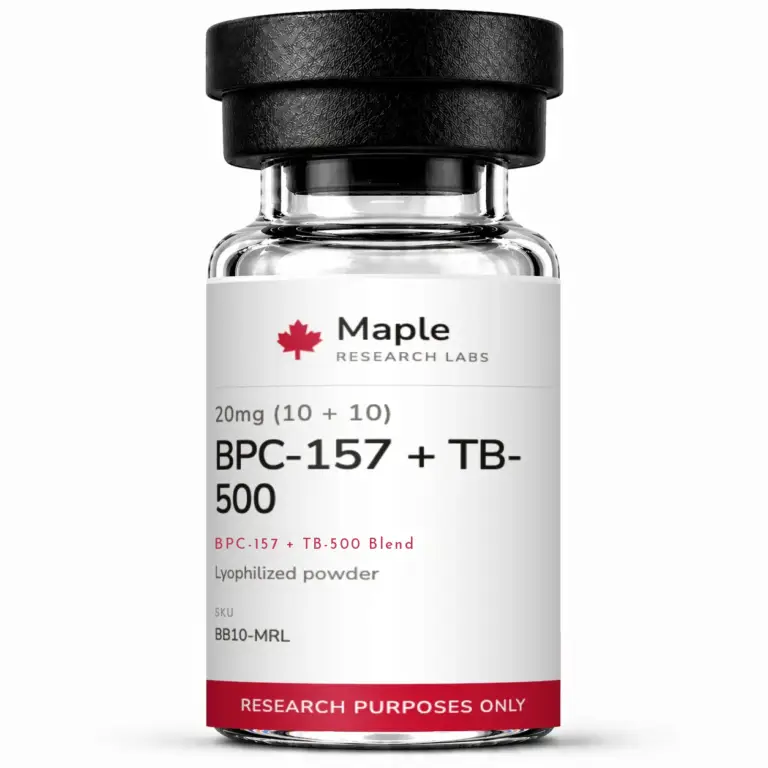
Related catalogue items include the BPC-157 + TB-500 Blend or the GLOW Blend 70MG for combined research applications.
Join the research list
New arrivals, current pricing, and research breakdowns, every few days. Unsubscribe anytime.