 Maple
Maple Semaglutide Peptide Research: GLP-1 Receptor Agonism, Incretin Signaling Mechanisms, and Preclinical Metabolic Evidence
Semaglutide peptide research centres on a long-acting GLP-1 receptor agonist whose C18 fatty diacid side chain and two amino acid
Research summaries, mechanism of action deep-dives, and educational content on synthetic peptides for laboratory use.
Semaglutide peptide research centres on a long-acting GLP-1 receptor agonist whose C18 fatty diacid side chain and two amino acid
Combined CJC-1295 and ipamorelin administration produces six- to ten-fold greater growth hormone release than either peptide alone through simultaneous GHRH-R and GHS-R1a activation. This review examines the molecular basis of dual-pathway somatotroph synergy, pharmacokinetic considerations, and current preclinical evidence.
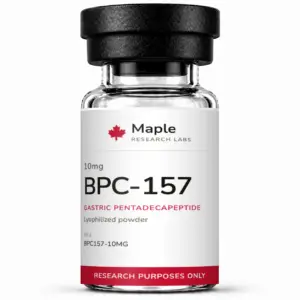
Comprehensive review of BPC-157 pentadecapeptide research mechanisms including nitric oxide system modulation, VEGFR2-mediated angiogenesis, growth hormone receptor upregulation, GAP-43 neuroprotective pathways, and translational evidence from over 500 published preclinical studies.
Selank (Thr-Lys-Pro-Arg-Pro-Gly-Pro) is a synthetic tuftsin-derived heptapeptide that modulates anxiolytic and immunoregulatory pathways through indirect GABAergic allosteric modulation, BDNF upregulation,
Peptide impurity profiling is the systematic identification and quantification of unwanted byproducts that arise during peptide synthesis, including truncated sequences,
Accelerated stability testing is a cornerstone of research peptide quality assessment, providing critical data on how peptide compounds degrade under
PT-141 (bremelanotide) is a synthetic cyclic heptapeptide that activates melanocortin-3 and melanocortin-4 receptors (MC3R/MC4R) in hypothalamic neurons, representing the only
The central question in any ipamorelin vs tesamorelin comparison is receptor pharmacology. Ipamorelin and tesamorelin are both synthetic peptides that
Peptide solubility is one of the most common practical challenges in research peptide work, and poor dissolution technique is a
SS-31 (elamipretide) is a mitochondria-targeted tetrapeptide that has emerged as one of the most studied compounds in mitochondrial medicine research.
Canadian supplier of high-purity research compounds for laboratory and scientific applications.
Packaged and shipped from British Columbia
[email protected]That is the third-party report for the BPC-157 10MG on the shelf right now. Every vial ships against a batch report you can open yourself. Add your email and your first-order code appears right here.
For research purposes only. Not for human consumption. Not for diagnostic or therapeutic use. Sold to qualified researchers 18+.