 Maple
Maple 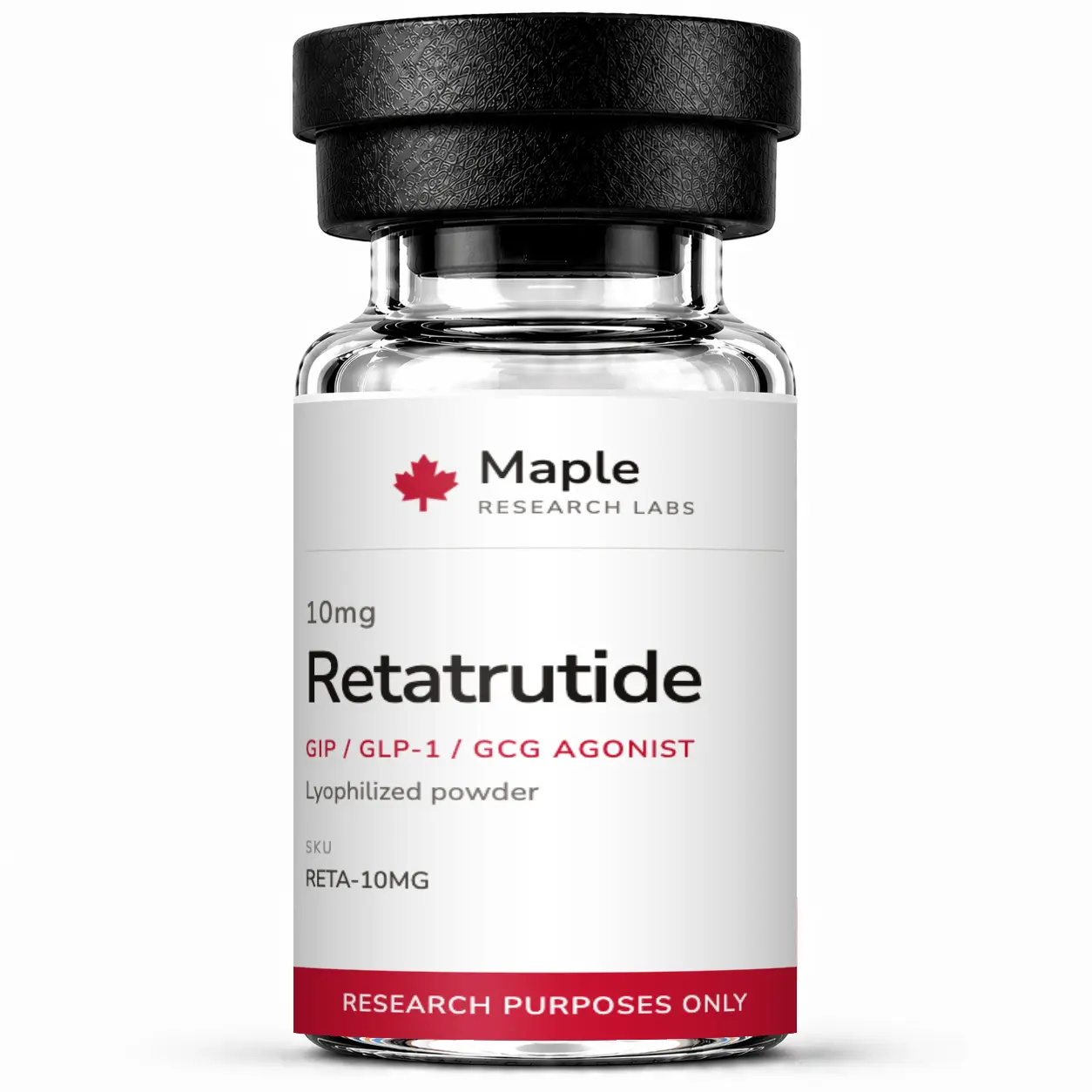
Compound: Retatrutide
CAS Number: 2381089-83-2
Molecular Formula: C205H320N56O63S2
Purity: 99.71% (HPLC-UV verified)
Third-Party Testing: Testides Analytical (independent lab, Toronto)
COA Download: View Full COA (PDF)
Report: DBAV-RETA-10-062726
Source: Canadian manufactured
Shipping: Same-day from our BC facility
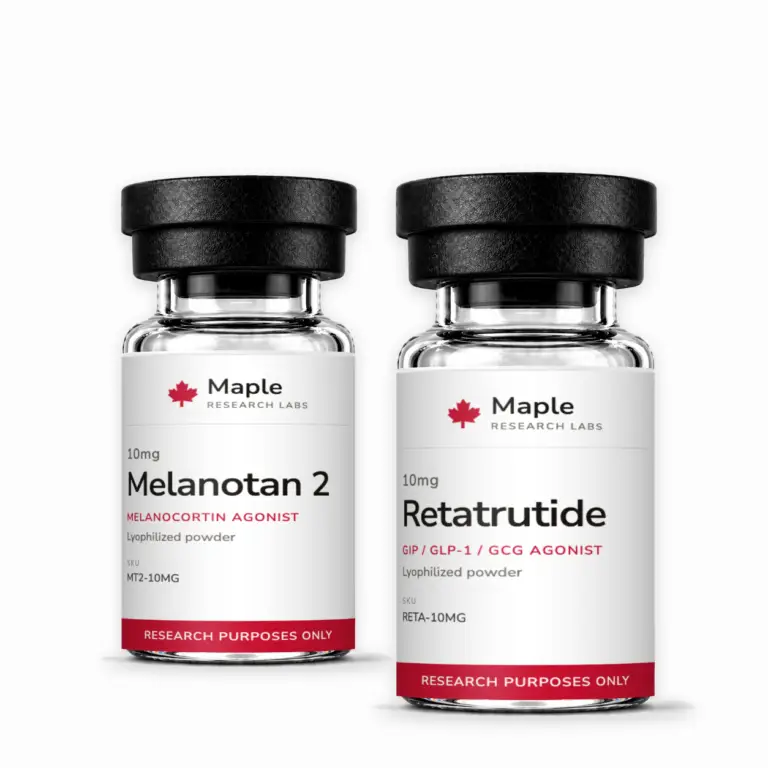
Retatrutide peptide Canada: a novel triple receptor agonist targeting GLP-1, GIP, and glucagon receptors simultaneously. This investigational research compound is available from Maple Research Labs at 10mg per vial with greater than 99%+ HPLC-verified purity and batch-specific COA.
Product Specifications
- Alternative Names: LY-3437943, GGG Tri-Agonist
- Receptor Targets: GLP-1R, GIPR, GCGR
- Purity: >99%+ (HPLC verified)
- Form: Lyophilized powder
- Quantity: 10mg per vial
Retatrutide Peptide Canada Research Summary
Retatrutide (LY-3437943) is a synthetic peptide developed as a triple agonist of the glucagon-like peptide-1 receptor (GLP-1R), glucose-dependent insulinotropic polypeptide receptor (GIPR), and glucagon receptor (GCGR). This triple agonist approach distinguishes retatrutide peptide Canada research products from dual agonists such as tirzepatide (GLP-1R/GIPR) and single agonists such as semaglutide (GLP-1R only).
The rationale for triple agonism is based on preclinical research demonstrating that glucagon receptor activation contributes to energy expenditure and lipid metabolism through distinct mechanisms from those engaged by GLP-1R and GIPR agonism. Published research suggests that the addition of glucagon receptor activity to the GLP-1/GIP agonist profile may produce metabolic effects not achievable through dual agonism alone.
Mechanism of Action Research
Retatrutide’s triple agonist profile engages three distinct G protein-coupled receptors with complementary downstream signaling effects studied in preclinical models. GLP-1R agonism is associated with incretin-mediated insulin secretion and appetite regulation pathways. GIPR agonism contributes to glucose-dependent insulin release and may modulate adipose tissue metabolism. GCGR agonism activates hepatic gluconeogenesis and glycogenolysis pathways, and research suggests it increases energy expenditure through thermogenic mechanisms.
The structural design of retatrutide incorporates modifications that allow simultaneous engagement of all three receptor systems with distinct potency ratios. Published binding affinity studies have characterized the peptide’s relative activity at each receptor, with the highest potency reported at the GIPR, followed by GLP-1R and GCGR.
Preclinical pharmacokinetic studies have examined the peptide’s metabolic stability, half-life characteristics, and receptor occupancy patterns in animal models. The compound incorporates fatty acid modifications designed to extend circulating half-life through albumin binding, similar to approaches used in other long-acting peptide agonists.
Preclinical Study Summary
Retatrutide has been investigated in multiple preclinical metabolic research models. Published studies have examined its effects on glucose homeostasis, lipid metabolism, body composition, and energy expenditure in rodent and non-human primate models. The triple agonist mechanism represents a newer area of incretin biology research compared to established single and dual agonist compounds.
All findings referenced are from preclinical research and early-phase investigations. Researchers should consult primary literature for complete experimental protocols.
References
- Jastreboff AM, et al. Triple-Hormone-Receptor Agonist Retatrutide for Obesity. N Engl J Med. 2023 (PubMed)
Retatrutide Peptide Canada Quality Assurance
Verified products of retatrutide peptide Canada from Maple Research Labs undergoes independent third-party HPLC analysis confirming purity exceeding 99%+. Each order includes a batch-specific COA with retention time data, purity percentage, and mass spectrometry identity verification. Given the complexity of this triple agonist peptide structure, our analytical protocols include additional quality checks for correct folding and modification integrity.
Storage and Handling
Store lyophilized at -20C. Reconstituted solutions at 2-8C, use within 28 days. Avoid freeze-thaw cycles and light exposure.
Shipping
Ships same-day from our Canadian facility. Temperature-controlled packaging included.
Certificate of Analysis (COA)
| Testing Laboratory | Testides (testides.com) |
| Report Number | DBAV-RETA-10-062726 |
| Purity (HPLC-UV) | 99.71% |
| Fill Accuracy | 112.1% (11.21mg measured / 10.00mg expected) |
| Date Tested | July 12, 2026 |
| Download COA | Download Full COA (PDF) |
For research purposes only. Not for human consumption. Not for diagnostic or therapeutic use.
Related Research Articles
- Retatrutide vs Semaglutide: Research Comparison
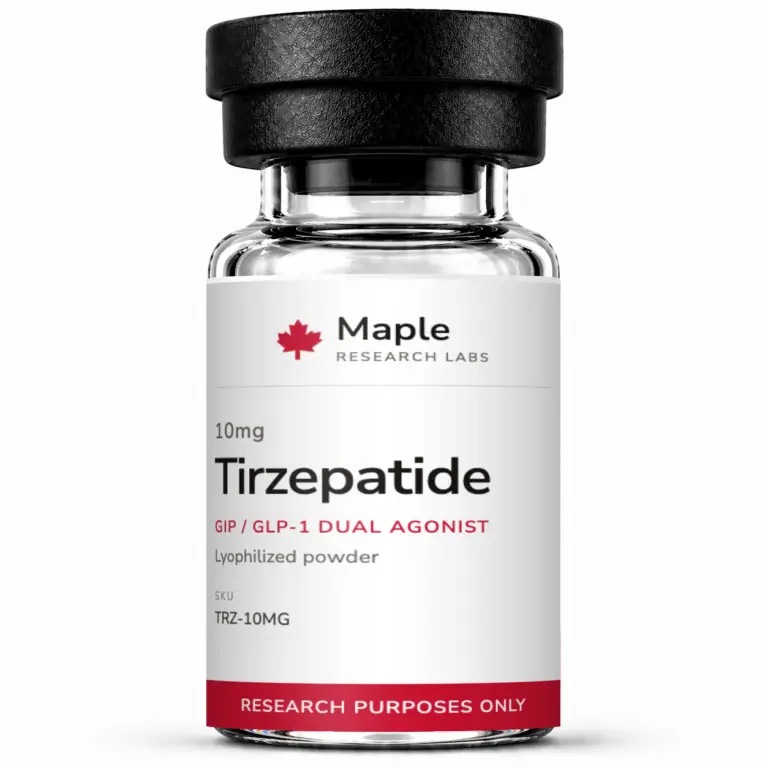
- Tirzepatide vs Retatrutide: Dual vs Triple Agonist Research
- Semaglutide vs Retatrutide: GLP-1 Receptor Agonist Research
- Certificates of Analysis (COA) Documentation
- Browse All Research Peptides
Frequently Asked Questions
What is the CAS number for Retatrutide?
The CAS registry number for Retatrutide is 2381089-83-2. It is a triple agonist peptide targeting GIP, GLP-1, and glucagon receptors.
How is Retatrutide purity verified?
Independent HPLC by Testides Analytical. Current batch tested at 99.71% purity (Report DBAV-RETA-10-062726). Full COA available as PDF on this page.
How should Retatrutide be stored?
Store lyophilized at -20C. Retatrutide is a large peptide (molecular weight ~4,583 Da) and should be handled with standard peptide storage protocols.
Related Research Peptides from Maple Research
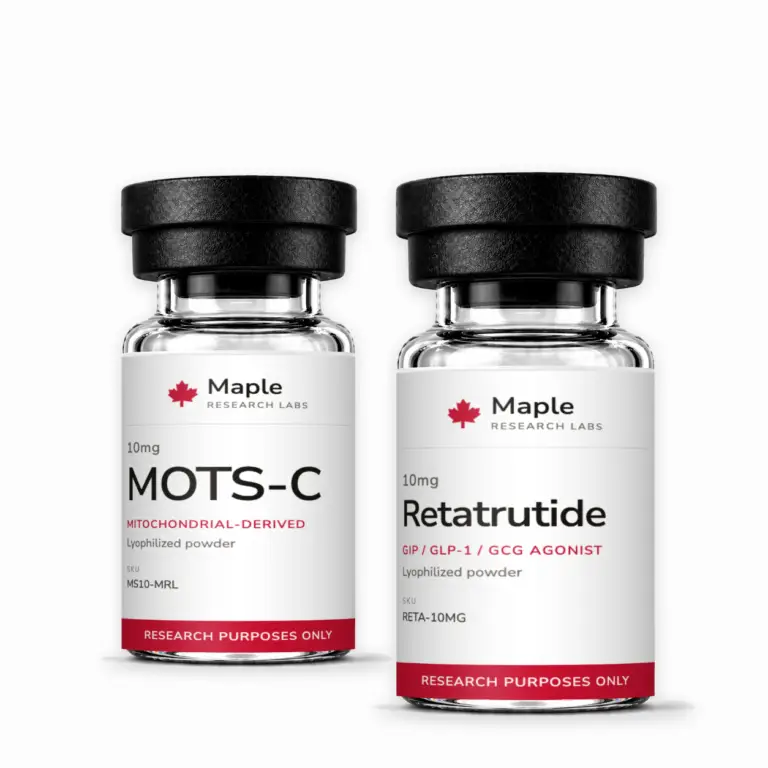
Researchers may also be interested in Tesamorelin 5MG, Ipamorelin 5MG, and MOTS-C 10MG. All products are shipped same-day from Canada with third-party purity verification.
Want more research like this?
Weekly peptide study breakdowns. No spam. Unsubscribe anytime.

Reviews
There are no reviews yet.