 Maple
Maple Peptide reconstitution is the controlled dissolution of a lyophilized peptide into a compatible solvent, and solvent choice plus storage temperature govern how long the resulting solution stays analytically intact. Bacteriostatic water is the general-purpose solvent for most research peptides, while poorly soluble sequences require an acetic acid or DMSO pre-solubilisation step before dilution. Reconstituted peptide stability is measured in weeks at 4 degrees C versus months to years for the lyophilized solid, which is why the reconstitution step is the single largest controllable variable in peptide handling.
Peptide reconstitution is a foundational laboratory skill that directly impacts research reproducibility. Errors in solvent selection, volume calculation, or handling technique can degrade peptide integrity before an experiment begins, introducing confounding variables that compromise data quality. This guide covers the evidence-based best practices for reconstituting research peptides, with the published mechanisms behind solvent compatibility, concentration effects, and the common failure modes that researchers should avoid.
For research purposes only. Not for human consumption. Not for diagnostic or therapeutic use.
Why Reconstitution Protocol Matters for Research Peptide Integrity
Lyophilized peptides are manufactured as dry powder specifically because the solid state dramatically extends shelf life. The reason is molecular mobility: in the dried, glassy state the reactants for hydrolysis, deamidation and oxidation cannot diffuse to each other at any useful rate, whereas in solution every degradation pathway runs at its solution-phase rate. Wang (2000, International Journal of Pharmaceutics 203:1-60) reviewed why lyophilization is the default strategy for unstable peptides and proteins and how residual moisture, excipients and storage temperature set the stability of the dried cake. The reconstitution step is therefore the transition point where peptide stability risk increases substantially, and the quantitative rule for a given peptide can only come from a stability study on that peptide; our article on retest periods and shelf-life extrapolation explains how such studies are designed.
The primary degradation pathways for reconstituted peptides include hydrolysis and isomerisation at aspartate residues, deamidation of asparagine, oxidation of methionine, tryptophan and cysteine, and aggregation, which for cysteine-containing sequences can proceed through intermolecular disulfide formation. Cleland, Powell and Shire (1993, Critical Reviews in Therapeutic Drug Carrier Systems 10:307-377) reviewed aggregation, deamidation and oxidation as the three dominant problems in developing stable protein and peptide formulations, and Manning and colleagues (2010, Pharmaceutical Research 27:544-575) updated the picture with the mechanistic work of the following two decades. All three pathways depend on solvent composition, pH and concentration, which is what makes reconstitution a chemistry decision rather than a matter of adding water.
Solvent Selection: Bacteriostatic Water vs. Sterile Water vs. Acetic Acid
The choice of reconstitution solvent depends on the peptide’s net charge and isoelectric point (pI), its hydrophobicity, and the intended research application. The three most common solvents in peptide research are bacteriostatic water (containing 0.9% benzyl alcohol), sterile water for injection, and dilute acetic acid (0.1% to 1.0%).
Bacteriostatic Water
Bacteriostatic water is the most widely used reconstitution solvent for research peptides. The 0.9% benzyl alcohol acts as an antimicrobial preservative, which is what allows a multiple-dose container to be entered more than once: USP General Chapter <797> assigns opened multiple-dose containers a beyond-use date of 28 days after the first puncture unless the manufacturer specifies otherwise, whereas an opened single-dose container of preservative-free sterile water must be used within hours and then discarded. The 28-day figure is a microbiological limit on the container, not a statement about the chemical stability of the peptide dissolved in it.
The preservative is not chemically inert toward the solute. Zhang and colleagues (2004, Journal of Pharmaceutical Sciences 93:3076-3089) showed that benzyl alcohol accelerated aggregation and precipitation of recombinant interleukin-1 receptor antagonist by binding weakly and hydrophobically to the protein and shifting the population toward partially unfolded, aggregation-competent species. Thirumangalathu and colleagues (2006, Journal of Pharmaceutical Sciences 95:1480-1497) found the same mechanism for granulocyte colony-stimulating factor, with 0.9% benzyl alcohol accelerating aggregation at pH 7.0, far more strongly at 37 degrees C than at 25 degrees C, and not at all at pH 3.5. Both studies used proteins with defined tertiary structure, and short research peptides have far less structure to perturb, but the finding is a reason to keep reconstituted solutions cold and to prefer preservative-free solvent for any peptide known to aggregate.
Most research peptides dissolve readily in bacteriostatic water at neutral to slightly acidic pH. This includes commonly studied peptides like BPC-157, ipamorelin, semaglutide, and TB-500.
Sterile Water
Preservative-free sterile water is preferred when benzyl alcohol may interfere with specific assay conditions, when a peptide is aggregation-prone, or in cell culture work where the preservative would be carried into the medium. The tradeoff is microbiological: without a preservative, an opened container has no protection against contamination introduced by each entry, so single-use aliquots are the correct format.
Dilute Acetic Acid (0.1%)
Peptides with a net positive charge at neutral pH, meaning more lysine, arginine and histidine residues than aspartate and glutamate, generally dissolve well in water, and when they do not, dilute acetic acid (0.1%, approximately pH 3) increases protonation and improves dissolution. Peptides with a net negative charge that resist dissolution respond instead to a small amount of dilute ammonium bicarbonate or ammonia. Neutral or strongly hydrophobic sequences may need an organic co-solvent first. This is the standard solubility decision tree published in peptide manufacturers’ technical guidance, and it works because solubility is governed by charge state, which the solvent pH controls.
A metal-coordinated peptide is the exception to the acid step. GHK-Cu is supplied as a preformed copper(II) complex whose coordination through the amino terminus, the histidine imidazole and backbone nitrogens is pH dependent, so acidifying the solvent risks dissociating the complex rather than helping it dissolve. Water or a neutral buffer is the appropriate solvent.
A practical rule: if a peptide does not dissolve within a few minutes of gentle swirling in the first-choice solvent, change the solvent chemistry before increasing mechanical agitation, because agitation creates the air-liquid interface that drives aggregation.
Concentration Calculations: Getting the Math Right
Accurate concentration calculation requires knowing the net peptide content of the lyophilized product, not just the total vial weight. Synthetic peptides purified by reversed-phase HPLC are almost always isolated as trifluoroacetate salts, and the counterion plus bound water can account for a substantial fraction of the gross powder mass. A vial labeled as containing 5 mg of peptide refers to the net peptide weight after accounting for these components, and the fill accuracy line on a certificate of analysis reports how closely the measured content matched that label claim.
The counterion is also an experimental variable in its own right. Cornish and colleagues (1999, American Journal of Physiology 277:E779-E783) found that trifluoroacetate at 10 to 100 nM reduced cell number and thymidine incorporation in fetal rat osteoblast cultures within 24 hours, with the same effect in chondrocytes and calvarial cultures, and that the TFA salts of amylin and calcitonin produced less proliferation than the hydrochloride salts of the same peptides, enough to mask a real proliferative effect. They recommended converting peptides to a hydrochloride or equivalent salt before cell-based work at concentrations above 1 nM. Andrushchenko, Vogel and Prenner (2007, Journal of Peptide Science 13:37-43) showed that lyophilising from 2 to 10 mM HCl removes essentially all TFA without altering peptide secondary structure, while higher HCl concentrations can modify the peptide.
The standard formula for reconstitution is: Volume (mL) = Net Peptide Weight (mg) / Desired Concentration (mg/mL). For example, to prepare a 2.5 mg/mL solution from a 5 mg vial, add 2.0 mL of solvent.
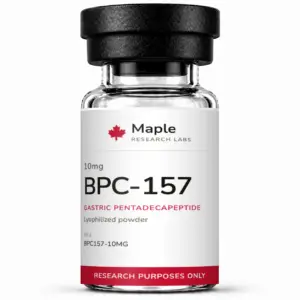
For molar concentrations, researchers need the molecular weight: Concentration (mM) = [Net Peptide Weight (mg) / Molecular Weight (g/mol)] / Volume (L). A 5 mg vial of BPC-157 (MW 1419.5 Da) reconstituted in 1 mL yields a 3.52 mM solution. Using the gross powder weight, or the molecular weight of the free peptide when the material is a salt, shifts every downstream concentration by the same proportional error.
Reconstitution Technique: Step-by-Step Protocol
Proper physical technique during reconstitution prevents localized concentration spikes and interface-induced aggregation:
Step 1: Temperature equilibration. Allow the lyophilized vial to reach room temperature (20 to 25 degrees C) before opening. Cold vials attract condensation, which introduces uncontrolled water and can cause localized premature dissolution at the powder surface.
Step 2: Slow solvent addition. Add solvent along the inside wall of the vial, not directly onto the powder cake. Direct impact can trap air in the powder matrix and create foam. Maa and Hsu (1997, Biotechnology and Bioengineering 54:503-512) showed with recombinant human growth hormone that shear alone caused negligible aggregation, but shear in the presence of an air-liquid interface produced irreversible non-covalent aggregates, that the rate scaled with protein concentration and interfacial area, and that foaming was damaging even at low shear. Kreilgaard and colleagues (1998, Journal of Pharmaceutical Sciences 87:1597-1603) reported the same for agitation-induced aggregation of recombinant factor XIII and showed that a non-ionic surfactant, Tween 20, prevented it. The interface, not the motion, is the enemy.
Step 3: Gentle dissolution. Swirl the vial gently. Do not vortex, shake vigorously, or sonicate. Mechanical agitation continuously generates fresh air-liquid interface where peptides preferentially adsorb, unfold and aggregate. If the peptide does not dissolve within a few minutes of gentle swirling, allow it to sit at room temperature for 15 to 30 minutes before trying a different solvent.
Step 4: Visual inspection. The final solution should be clear and colorless to slightly opalescent. Visible particles, cloudiness, or persistent foam indicate incomplete dissolution or aggregation. Do not use solutions that fail visual inspection.
Post-Reconstitution Stability: What the Data Shows
Once reconstituted, peptide stability varies significantly by compound, concentration, and storage temperature, and there is no published table that gives a universal half-life for “reconstituted peptides” as a class. Any such figure quoted without a peptide name and a study behind it should be ignored. What the literature does establish is the direction and mechanism of each effect:
Refrigerated storage (2 to 8 degrees C): Cold storage slows every chemical degradation pathway, since hydrolysis, deamidation and oxidation all have appreciable activation energies, and it also slows the benzyl alcohol-driven aggregation described above, which Thirumangalathu and colleagues found was far faster at 37 degrees C than at 25 degrees C. Refrigeration is the default for any reconstituted solution that will be used across more than one session, and the duration should be set from stability data for the specific peptide, with the reconstitution date written on the vial.
Room temperature (20 to 25 degrees C): Stability drops significantly, because the same reactions run faster and because a preservative-free solution has no protection against microbial growth. Benchtop storage is appropriate only for the duration of a single session.
Frozen storage (-20 degrees C): Freezing reconstituted peptides carries its own risks. Cao and colleagues (2003, Biotechnology and Bioengineering 82:684-690) showed that damage to proteins in dilute solution depends on the freezing and thawing rates, with fast freezing followed by slow thawing the most harmful combination because of exposure at the ice-liquid interface and recrystallisation during thawing. Bhatnagar, Bogner and Pikal (2007, Pharmaceutical Development and Technology 12:505-523) separated the stresses involved: cold denaturation, adsorption to the ice surface, freeze-concentration of solutes, and the pH shift that sodium phosphate buffers undergo as one salt crystallises before the other. If freezing is unavoidable, aliquoting into single-use volumes eliminates repeated freeze-thaw cycles, and freezing slowly then thawing quickly minimises the damage per cycle.
Common Reconstitution Errors and How to Avoid Them
Based on the published mechanisms and supplier technical bulletins, the most frequent reconstitution errors in peptide research laboratories include:
Using the wrong solvent pH. A peptide near its isoelectric point carries no net charge and is at its least soluble; moving the pH away from the pI in either direction increases solubility. Checking the sequence for its charged residues before selecting a solvent prevents this issue.
Over-concentration. Aggregation is concentration-dependent. Wang, Nema and Teagarden (2010, International Journal of Pharmaceutics 390:89-99) list concentration among the most consistent accelerants of protein aggregation, and Zapadka and colleagues (2017, Interface Focus 7:20170030) reached the same conclusion for peptides, adding that short, hydrophobic sequences with low net charge are the most prone to fibril formation. The threshold is peptide-specific; the safe practice is to reconstitute at the lowest concentration the experiment allows rather than preparing a concentrated stock for convenience.
Contamination from repeated punctures. Each needle puncture through a rubber septum introduces potential contaminants, creates a pathway for microbial ingress, and can shed elastomer fragments into the solution. The 28-day beyond-use date in USP <797> assumes aseptic technique at every entry; it does not make an unlimited number of entries safe.
Light exposure. Peptides containing tryptophan, tyrosine, phenylalanine or cysteine residues are susceptible to photodegradation. Kerwin and Remmele (2007, Journal of Pharmaceutical Sciences 96:1468-1479) identified these four residues as the primary photo-oxidation targets in protein biologics and noted that photodamage can alter structure and activity. Amber vials or aluminum foil wrapping remove the input entirely; the mechanisms are covered in our review of peptide degradation pathways.
Solvent Compatibility by Peptide Category
For quick reference, here is a general solvent compatibility guide based on peptide characteristics. Always verify with the specific peptide’s technical documentation and Certificate of Analysis:
Neutral/slightly basic peptides (pI 6 to 8): Bacteriostatic water is typically the first choice. This includes most growth hormone secretagogues (ipamorelin, CJC-1295), BPC-157, and TB-500.
Basic peptides (pI above 8): Start with bacteriostatic water; if dissolution is incomplete, try 0.1% acetic acid. Some neuropeptides fall into this category.
Acidic peptides (pI below 5): Start with water; if dissolution is incomplete, a small volume of dilute ammonium bicarbonate raises the pH and deprotonates the carboxylates. Avoid acetic acid, which pushes these sequences toward their isoelectric point.
Hydrophobic peptides: May require initial dissolution in a small volume of DMSO (typically 50 to 100 microliters) followed by dilution with aqueous solvent. DMSO final concentration should be kept low, commonly at or below 1%, and checked against the tolerance of the specific bioassay, since some cell lines respond to far less.
Metal-coordinated peptides: Peptides like GHK-Cu that are supplied as metal complexes should be dissolved in water or neutral buffer, not acid, to preserve the coordination.
Key Takeaways for Researchers
The dried state is stable because nothing can move; solution stability has to be established peptide by peptide (Wang, 2000; Manning et al., 2010). Bacteriostatic water buys 28 days of microbiological beyond-use dating under USP <797>, but its benzyl alcohol can accelerate aggregation of structured solutes, especially warm (Zhang et al., 2004; Thirumangalathu et al., 2006). Trifluoroacetate counterions inhibit cell proliferation at nanomolar concentrations and should be exchanged before cell-based assays (Cornish et al., 1999; Andrushchenko et al., 2007). Aggregation during reconstitution is driven by the air-liquid interface, not by shear alone, so wall addition and gentle swirling matter (Maa and Hsu, 1997; Kreilgaard et al., 1998). Freeze slowly, thaw fast, aliquot once, and avoid sodium phosphate for frozen solutions (Cao et al., 2003; Bhatnagar et al., 2007). Protect tryptophan-, tyrosine-, phenylalanine- and cysteine-containing peptides from light (Kerwin and Remmele, 2007). Calculate concentration from net peptide content, never gross powder weight.
Ensuring Peptide Quality Before Reconstitution
Reconstitution technique only matters if the starting material is verified. Before reconstituting any research peptide, researchers should confirm purity via the supplier’s Certificate of Analysis. At Maple Research Labs, independent third-party COAs verify purity by HPLC, and current COA status for each compound is published on the certificates of analysis page. This documentation is critical for ensuring that your reconstituted solution contains what you expect at the purity you need.
For detailed guidance on interpreting COA data, see our researcher’s guide to reading a Certificate of Analysis. For storage recommendations after reconstitution, review our peptide storage and handling guide. The wider receiving-to-disposal workflow, including aliquot labelling and usage logs, is in our laboratory handling guide.
Canadian researchers can source verified research peptides with same-day shipping and full COA transparency from Maple Research Labs.
A reconstituted solution that looks clear is not necessarily particle free. Particles between 2 and 100 micrometres are invisible to the eye, and subvisible particulate testing under USP 787 and 788 exists because that population signals aggregation, container wear, or filtration failure long before turbidity appears. The nucleation kinetics behind that process, and the excipient strategies used to slow it, are covered in our review of peptide aggregation and fibrillation.
For research purposes only. Not for human consumption. Not for diagnostic or therapeutic use.
Related Tool: Use our reconstitution concentration calculator to quickly determine solution concentration from peptide mass and diluent volume.
For peer-reviewed research on this topic, visit PubMed.
15% off your first order
Join the research list and we will email your code. New arrivals, current pricing, and research breakdowns. Unsubscribe anytime.
Pingback: Peptide Sterility Testing, Bioburden and Microbial Limits in Research Quality Control - Maple Research Labs
Pingback: CGRP Peptide Research: CLR/RAMP1 Receptor Mechanisms
Pingback: Reconstitutie met azijnzuur: wanneer bacteriostatic water niet werkt
Pingback: CJC-1295 Research | Maple Research Labs