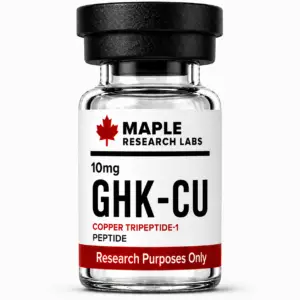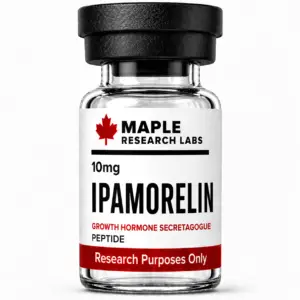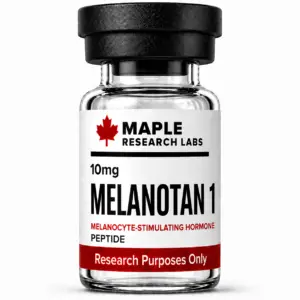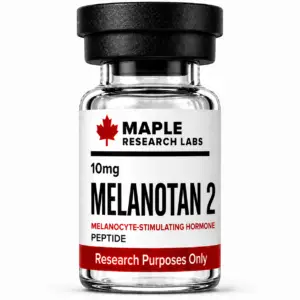
Maple Research Labs Maple Research Labs
Canadian-Made
>98% Purity
COA Every Batch
Same-Day Shipping

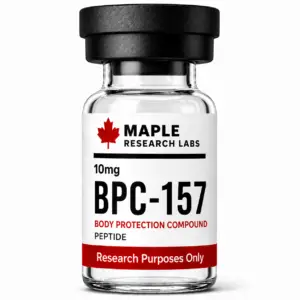
BPC-157 10MG

$75.00

Body Protection Compound-157. 10mg lyophilized peptide, >98% purity. For laboratory and in-vitro research use only.

Availability: 29 in stock

Category:
Research Compound Summary
Compound: BPC-157
CAS Number: 137525-51-0
Molecular Formula: C62H98N16O22
Purity: 99.1% (HPLC verified)
Third-Party Testing: Janoshik Analytical (independent lab, Prague)
COA Verification: janoshik.com/verify
Batch: MRL-BPC-0326
Source: Canadian manufactured
Shipping: Same-day from Vancouver, BC

BPC-157 peptide Canada: a synthetic pentadecapeptide derived from human gastric juice protein BPC (Body Protection Compound-157). This research-grade compound is available from Maple Research Labs with greater than 98% HPLC-verified purity and a batch-specific Certificate of Analysis (COA) included with every order.

Product Specifications

  • CAS Number: 137525-51-0
  • Molecular Formula: C62H98N16O22
  • Molecular Weight: 1419.53 g/mol
  • Purity: >98% (HPLC verified)
  • Form: Lyophilized powder
  • Quantity: 10mg per vial

BPC-157 Peptide Canada Research Summary

BPC-157 (Body Protection Compound-157) is a synthetic pentadecapeptide derived from a partial sequence of human gastric juice protein BPC. It consists of 15 amino acids and is stable in human gastric juice, a characteristic that distinguishes it from many other bioactive peptides in preclinical research. The peptide’s sequence (Gly-Glu-Pro-Pro-Pro-Gly-Lys-Pro-Ala-Asp-Asp-Ala-Gly-Leu-Val) was first characterized by research groups investigating cytoprotective properties of gastric juice-derived compounds.

Extensive animal model research has investigated BPC-157’s effects on tissue repair mechanisms. Published studies in rodent models have documented effects on tendon-to-bone healing, ligament recovery, muscle crush injury recovery, and gastrointestinal mucosal integrity. Research has demonstrated involvement of the NO system, growth factor modulation (including VEGF, EGF), and FAK-paxillin signaling pathways.

Mechanism of Action Research

At the molecular level, published research has identified several signaling pathways potentially involved in the biological activities observed in preclinical BPC-157 peptide studies. Key areas of investigation include modulation of the nitric oxide (NO) system through interaction with NOS isoforms, upregulation of growth factor receptors (including VEGFR2 and EGF receptor systems), and engagement of the FAK-paxillin signaling cascade associated with cell migration and adhesion.

In vitro studies using endothelial cell models have demonstrated effects on fibroblast migration rates, endothelial cell tube formation in angiogenesis assays, and cytoprotective mechanisms in cell culture models exposed to oxidative and chemical stressors. These observations have contributed to ongoing research interest in the compound’s potential interactions with vascular endothelial growth factor pathways.

Preclinical Study Summary

Animal model investigations have explored BPC-157 across multiple tissue types and experimental injury models. Published peer-reviewed studies include research on transected Achilles tendons in rats, quadriceps muscle crush injury models, surgically-induced and chemically-induced gastrointestinal lesions, NSAID-induced mucosal damage models, and ligament transection recovery studies.

The peptide has been examined in over 100 published preclinical studies conducted by multiple independent research groups across several countries. Research has spanned gastrointestinal, musculoskeletal, and neurological model systems. The breadth of published preclinical literature makes BPC-157 one of the more extensively characterized synthetic peptides in the tissue repair research field.

All published findings referenced here are based exclusively on animal models and in vitro systems. No completed clinical trials in human subjects have been reported in the peer-reviewed literature to date. Researchers should consult primary literature sources for full experimental protocols and outcomes.

References

BPC-157 Peptide Canada Quality Assurance

Every batch of BPC-157 peptide Canada from Maple Research Labs undergoes independent third-party HPLC analysis to verify purity exceeding 98%. The batch-specific Certificate of Analysis (COA) is linked on this product page and includes retention time data, purity percentage, molecular weight confirmation by mass spectrometry, and identity verification. Our quality assurance pipeline involves seven stages from raw material verification through final lyophilization and packaging, ensuring consistent purity across all shipments of this research peptide to Canadian laboratories.

Storage and Handling

Store lyophilized BPC-157 peptide at -20C for long-term storage. Once reconstituted, store at 2-8C and use within 30 days. Avoid repeated freeze-thaw cycles. Keep away from direct light and moisture. Handle with appropriate laboratory safety protocols.

Shipping

Ships same-day from our Canadian facility. All orders include temperature-controlled packaging.

Certificate of Analysis (COA)

Testing Laboratory Janoshik Analytical
Purity 99.207% / 99.140%
Batch Number BC5/2025-1020
Analysis Date 21 NOV 2025
Task Number #89673
Verification Verify this COA on Janoshik.com

For research purposes only. Not for human consumption. Not for diagnostic or therapeutic use.

Related Research Articles

Learn more about this compound through our peer-reviewed research summaries:

Frequently Asked Questions

What is the CAS number for BPC-157?

The CAS registry number for BPC-157 (Body Protection Compound-157) is 137525-51-0. This unique identifier is assigned by the Chemical Abstracts Service and is used internationally to identify this specific pentadecapeptide compound.

How is BPC-157 purity verified at Maple Research Labs?

Every batch of BPC-157 undergoes independent third-party HPLC analysis by Janoshik Analytical in Prague, Czech Republic. The current batch (MRL-BPC-0326) tested at 99.1% purity. Each COA includes a verification key that can be independently confirmed at janoshik.com.

What is the molecular formula of BPC-157?

BPC-157 has the molecular formula C62H98N16O22 with a molecular weight of approximately 1419.53 Da. It is a synthetic pentadecapeptide consisting of 15 amino acid residues.

How should BPC-157 be stored for research use?

Lyophilized BPC-157 should be stored at -20C for long-term storage (stable for 24+ months) or 2-8C for short-term use. Once reconstituted in bacteriostatic water, store at 2-8C and use within 28 days. BPC-157 is highly stable due to the absence of oxidation-susceptible residues.

What research applications has BPC-157 been studied for?

BPC-157 has been investigated in over 100 published research studies, primarily in animal models. Research areas include tissue repair mechanisms, angiogenesis, cytoprotection, and interaction with the nitric oxide system. All available research is based on in-vitro and animal model data.

Title

Default Title

Reviews

There are no reviews yet.

Only logged in customers who have purchased this product may leave a review.

Shopping Cart

Maple Research Labs

Canadian supplier of high-purity research compounds for laboratory and scientific applications.

Vancouver, British Columbia, Canada

mapleresearchlabs@gmail.com
For Research Purposes Only. All products sold by Maple Research Labs are intended for laboratory research use only. Not for human consumption.
© 2026 Maple Research LabsPrivacy Policy | Legal | Refunds | Terms
Scroll to Top