 Maple
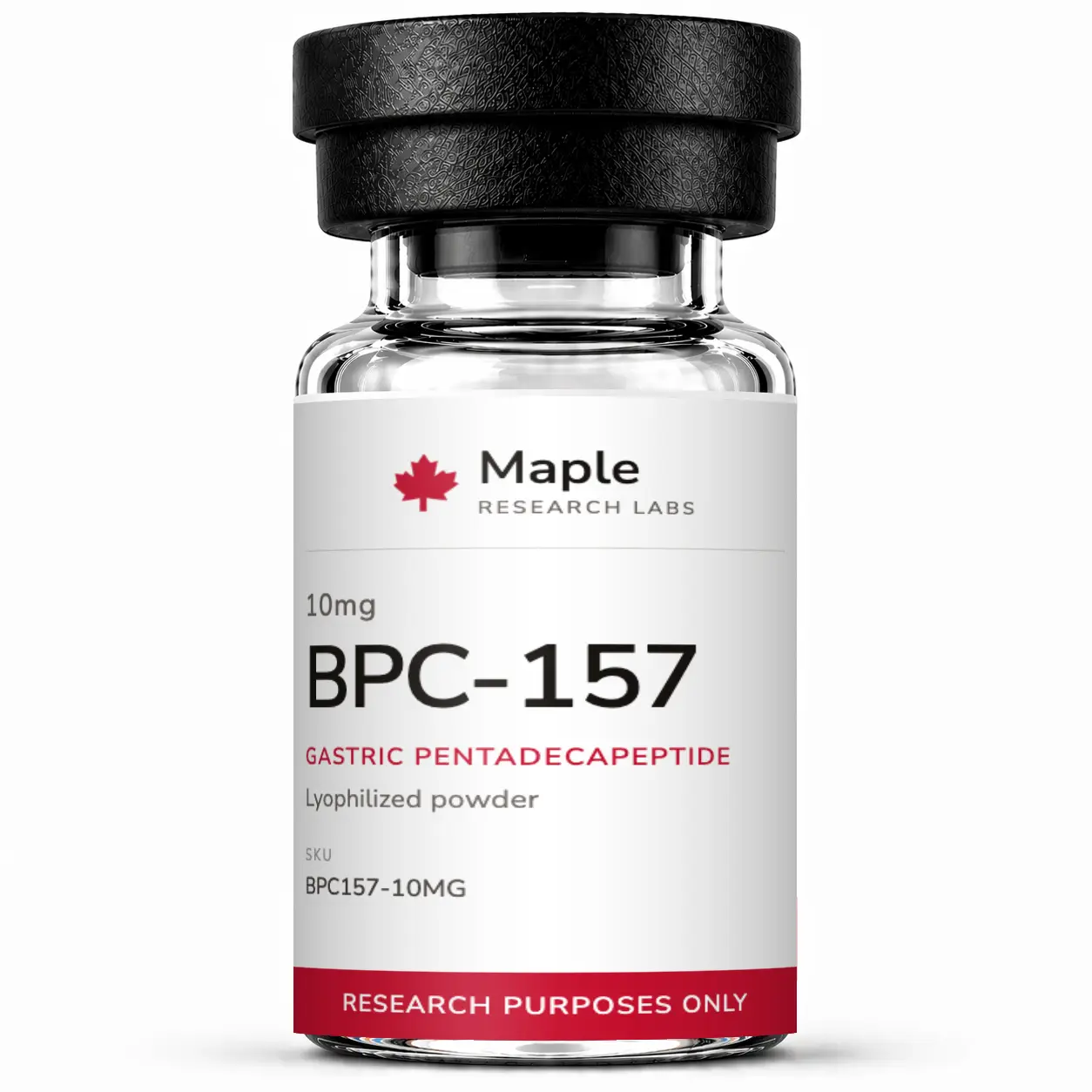
Answer first: BPC-157 (also written BPC 157) is a synthetic 15-amino-acid peptide, Gly-Glu-Pro-Pro-Pro-Gly-Lys-Pro-Ala-Asp-Asp-Ala-Gly-Leu-Val, described as a partial sequence of a protein isolated from gastric juice (CAS 137525-51-0, C62H98N16O22, approximately 1419.5 Da). Maple Research Labs supplies it in Canada as a lyophilised research reagent in 5mg and 10mg vials (single vial or 10-pack). A published third-party HPLC-UV report covers a tested 10mg sample (DBAV-BPC-10-051226, May 23, 2026: 99.41%) and does not establish 5mg coverage; see our Certificates of Analysis page. Research use only — not for human consumption.
Last reviewed: November 2026. When a new tested-sample report is published, the report linked from this product and the COA index are updated.
BPC-157 specifications
| Compound | BPC-157 — synthetic pentadecapeptide (also written BPC 157) |
| Sequence | Gly-Glu-Pro-Pro-Pro-Gly-Lys-Pro-Ala-Asp-Asp-Ala-Gly-Leu-Val (GEPPPGKPADDAGLV) |
| CAS number | 137525-51-0 |
| Molecular formula | C62H98N16O22 |
| Molecular weight | Approximately 1419.5 Da |
| Length | 15 amino acids |
| Form | Lyophilised white powder |
| Available sizes | 5mg or 10mg per vial; single vial or 10-pack (see product options) |
| Storage (lyophilised) | Sealed vial at −20°C, protected from light and moisture; avoid repeated freeze-thaw cycles |
| Analysis | HPLC-UV (214 nm) relative-area purity and content, independent third-party laboratory |
| Published tested sample | 10mg sample, report DBAV-BPC-10-051226, tested May 23, 2026: 99.41% relative area; 10.29mg measured vs 10.00mg expected (102.9%). Not 5mg coverage. |
| Intended use | Research use only (RUO) |
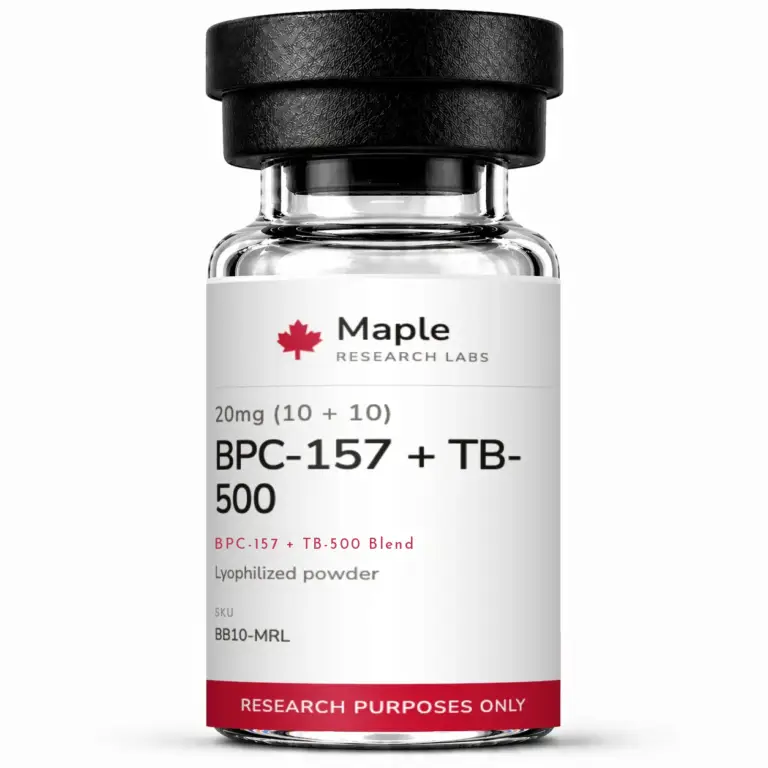
BPC-157 vs TB-500 and the BPC-157 + TB-500 Blend: catalogue comparison
| Feature | BPC-157 | TB-500 | BPC-157 + TB-500 Blend |
|---|---|---|---|
| Type | 15-residue synthetic peptide | Thymosin beta-4 related synthetic peptide (listed as CAS 77591-33-4) | Both peptides in one vial |
| CAS (as listed) | 137525-51-0 | 77591-33-4 | 137525-51-0 / 77591-33-4 |
| Published tested sample | 10mg, DBAV-BPC-10-051226 (May 23, 2026) | 10mg, DBAV-TB500-10-051226 (May 23, 2026) | 20mg sample, DBAV-BPCTB-20-062226 (Jul 2, 2026) |
Certificate of analysis — tested sample
COAs for tested samples are posted on our Certificates of Analysis page, and the linked report is updated when a new tested-sample report is published. The report currently linked for BPC-157 tested a 10mg sample (DBAV-BPC-10-051226, tested May 23, 2026); it does not establish 5mg coverage, and there is no published Maple report for the 5mg size yet. Maple vials do not carry printed lot or batch numbers, so read the report for its compound, tested size, date and method. HPLC-UV area percent is a method-specific relative-area result; it does not by itself establish sequence, molecular identity, sterility, endotoxin status or safety.
BPC-157 research summary
BPC-157 is a synthetic 15-amino-acid peptide (GEPPPGKPADDAGLV) described as a partial sequence of a protein isolated from gastric juice. Most of the published literature comes from preclinical cell and animal studies, and much of it from a single research group, so researchers should review primary sources and their methods directly.
Mechanism of action research
A published preclinical study examined BPC-157 in relation to growth hormone receptor expression. In cultured tendon fibroblasts isolated from rats, Chang et al. (2014) used cDNA microarray analysis and found growth hormone receptor among the most up-regulated genes, with increased receptor mRNA and protein and JAK2 activation when growth hormone was added. These are in vitro cell-culture observations.
Preclinical study summary
The findings summarised on this page come from cell-culture and animal studies. No human-use or therapeutic conclusion is drawn or implied. Researchers should consult the primary literature for experimental design, controls and complete results.
References
- Chang CH, Tsai WC, Hsu YH, Pang JH. Pentadecapeptide BPC 157 enhances the growth hormone receptor expression in tendon fibroblasts. Molecules. 2014;19(11):19066–19077. (PubMed 25415472)
Storage and handling
Store the sealed lyophilised vial at −20°C, protected from light and moisture, and avoid repeated freeze-thaw cycles. Follow your facility’s laboratory handling protocol.
Shipping in Canada
In-stock orders paid by 2 PM PT (Mon–Fri) ship the same business day from British Columbia with tracking. Canadian shipping is $9.95 flat, free at $350+ after discounts.
Related research resources
- Certificates of Analysis (tested samples)
- COA documentation and how to read a report
- How to evaluate a Canadian peptide supplier
- Canadian shipping rates and cut-off times
Frequently asked questions
What is BPC-157?
BPC-157 is a synthetic 15-amino-acid peptide (GEPPPGKPADDAGLV) described as a partial sequence of a gastric juice protein. Maple Research Labs supplies it in Canada as a lyophilised reagent in 5mg and 10mg vials for laboratory research use only.
Is BPC 157 the same as BPC-157?
Yes. “BPC 157”, “BPC-157” and “BPC157” are spellings of the same pentadecapeptide, listed under CAS 137525-51-0.
What is the CAS number and molecular formula of BPC-157?
BPC-157 is listed under CAS 137525-51-0, with molecular formula C62H98N16O22 and a molecular weight of approximately 1419.5 Da.
Does Maple publish a certificate of analysis for BPC-157?
Yes, for a tested sample. Report DBAV-BPC-10-051226 (independent HPLC-UV, tested May 23, 2026) covers a 10mg sample: 99.41% relative area, 10.29mg measured vs 10.00mg expected. It does not cover the 5mg size, which has no published Maple report yet. Maple vials do not carry printed lot numbers.
How should lyophilised BPC-157 be stored?
Keep the sealed lyophilised vial at −20°C, protected from light and moisture, and avoid repeated freeze-thaw cycles.
Does Maple ship BPC-157 within Canada?
Yes. In-stock orders paid by 2 PM PT (Mon–Fri) ship the same business day from British Columbia with tracking. Canadian shipping is $9.95 flat, free at $350+ after discounts. Current prices for each size and pack are shown in the product options.
Is BPC-157 for human use?
No. Maple’s BPC-157 is a research reagent sold for research purposes only. It is not for human consumption and not for diagnostic or therapeutic use.
For research purposes only. Not for human consumption. Not for diagnostic or therapeutic use.
Join the research list
New arrivals, current pricing, and research breakdowns, every few days. Unsubscribe anytime.