 Maple
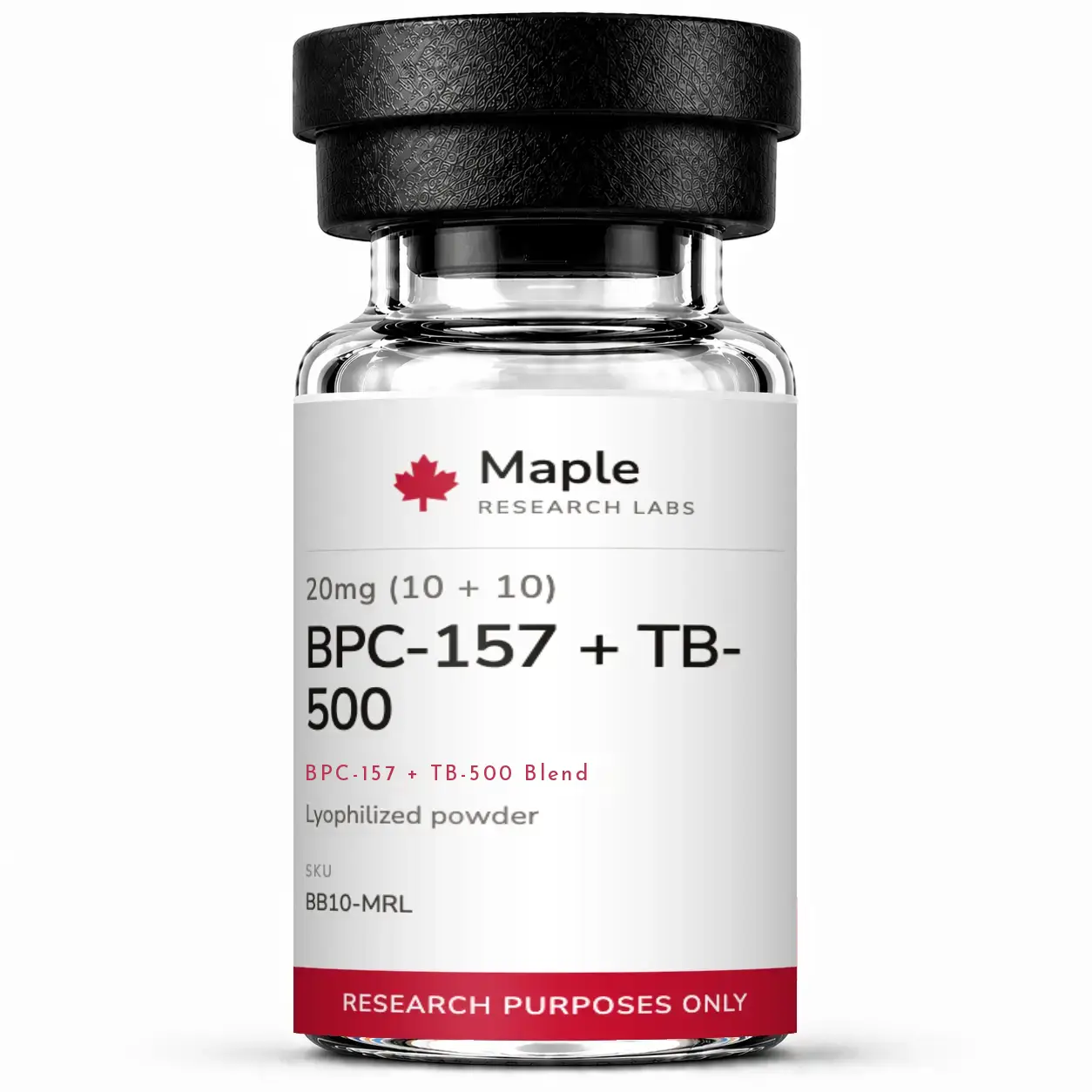
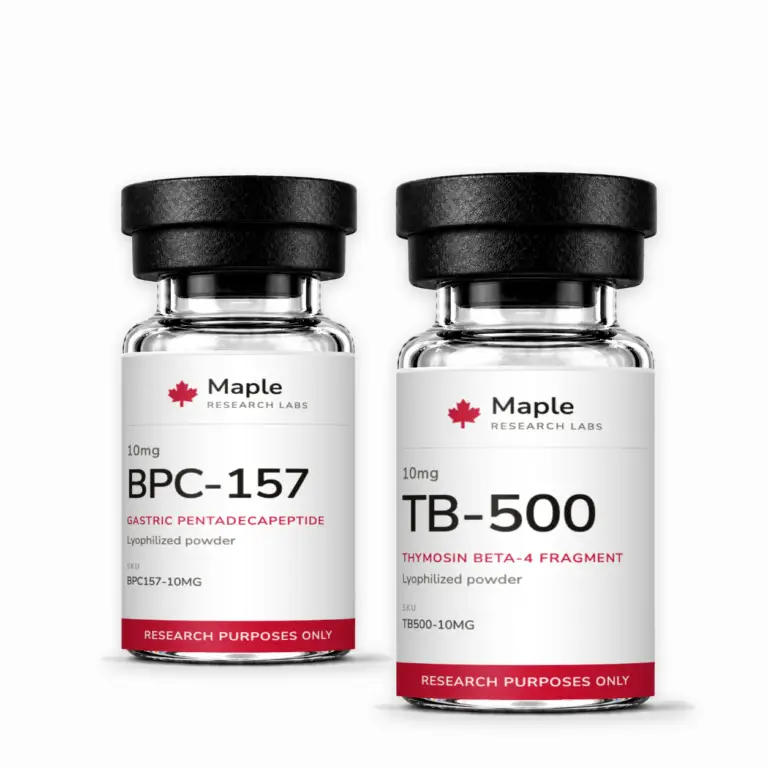
BPC-157 TB-500 blend Canada from Maple Research Labs combines two research peptides in a single vial with published tested-lot analytical documentation.
BPC-157 TB-500 blend Canada: a combined research peptide formulation containing both BPC-157 (Body Protection Compound-157) and TB-500 (Thymosin Beta-4 fragment) in a single vial. Available from Maple Research Labs with published tested-lot analytical documentation.
Product Specifications
- Components: BPC-157 + TB-500 (Thymosin Beta-4 fragment)
- BPC-157 CAS: 137525-51-0
- Purity: See the tested-lot report for method and measured results.
- Form: Lyophilized powder blend
BPC-157 TB-500 Blend Canada Research Summary
The BPC-157 TB-500 blend Canada product combines two of the most extensively studied tissue repair research peptides into a single formulation. BPC-157 is a gastric juice-derived pentadecapeptide investigated for NO modulation, VEGF receptor signalling, and FAK-paxillin signalling. TB-500 is a synthetic fragment of Thymosin Beta-4 studied for its interactions with the actin cytoskeleton, cell migration, and angiogenesis in preclinical models.
The rationale for combining these peptides in research settings is based on their complementary mechanisms of action. Published literature on each compound individually describes different signalling mechanisms: BPC-157 primarily through growth factor receptor modulation and NO system interactions, and TB-500 through actin sequestration and cytoskeletal dynamics that promote cell migration.
Component Mechanisms
BPC-157 (15 amino acids, MW 1419.53 g/mol) has been the subject of over 100 published preclinical studies. Key signaling pathways investigated include the NO system, VEGF/VEGFR2 axis, EGF receptor signaling, and the FAK-paxillin cascade associated with cell adhesion and migration.
TB-500 (active fragment of Thymosin Beta-4, 43 amino acids) acts primarily through G-actin sequestration, regulating cytoskeletal dynamics essential for cell motility. The LKKTETQ sequence within TB-500 is the identified actin-binding domain. Published research has examined TB-500 in actin-binding and cell-migration assays.
While individual compound research is extensive, published studies specifically examining the BPC-157/TB-500 combination are more limited. The combined formulation enables researchers to study potential interactions between these two mechanistically distinct peptides in a controlled experimental setting.
Preclinical Context
Both component peptides have been extensively characterized individually in preclinical models. BPC-157 has the larger published literature base with over 100 peer-reviewed studies. Thymosin Beta-4 and its fragments have similarly been studied across multiple tissue types and injury models. The blend format reduces the number of compounds researchers need to prepare and administer in combination studies.
All findings referenced are from preclinical research on individual components. No therapeutic claims are made.
References
- Sikiric P, et al. Brain-gut Axis and Pentadecapeptide BPC 157. Curr Neuropharmacol. 2016 (PubMed – BPC-157)
- Goldstein AL, et al. Thymosin beta4: a multi-functional regenerative peptide. Expert Opin Biol Ther. 2012 (PubMed – TB-500)
BPC-157 TB-500 Blend Canada Quality Assurance
Third-party certificates of analysis for tested samples are published on our COA page. Check the report’s compound, tested size, date and method. Vials do not carry printed lot or batch numbers. HPLC-UV area-percent is a method-specific relative-area result; it does not independently establish molecular identity or sterility, endotoxin status, or safety.
Storage and Handling
Store lyophilized at -20C. Avoid freeze-thaw cycles and light.
Shipping
In-stock orders paid by 2 PM PT (Mon–Fri) ship the same business day, from BC with tracking.
Certificate of Analysis (COA)
| Testing Laboratory | Independent third-party laboratory |
| Report Number | DBAV-BPCTB-20-062226 |
| Lot Number | 5819 |
| Purity (HPLC-UV) | See the tested-lot report for method and measured results. |
| Content / Fill Accuracy | 21.34mg measured / 20.00mg expected (106.7%) |
| Date Tested | July 2, 2026 |
| Download COA | Download Full COA (PDF) |
For research purposes only. Not for human consumption. Not for diagnostic or therapeutic use.
Related Research Articles
- BPC-157 vs TB-500: Research Comparison
- TB-500 vs BPC-157/TB-500 Blend: Research Comparison
- Understanding Peptide Purity and Documentation
- Certificates of Analysis (COA) Documentation
- Browse All Research Peptides
Frequently Asked Questions
What compounds are in the BPC-157 + TB-500 Blend?
This blend contains BPC-157 (CAS 137525-51-0) and TB-500 (CAS 77591-33-4) in a single vial for research convenience. Each compound retains its individual mechanism of action.
How is blend purity verified?
Third-party certificates of analysis for tested samples are published on our COA page. Check the report’s compound, tested size, date and method. Vials do not carry printed lot or batch numbers. HPLC-UV area-percent is a method-specific relative-area result; it does not independently establish molecular identity or sterility, endotoxin status, or safety.
How should the blend be stored?
Lyophilized: -20C.
Related Research Peptides from Maple Research
Researchers may also be interested in BPC-157 10MG, TB-500 5MG, and GLOW Blend 70MG. See each product’s available analytical documentation and tested-sample results in the COA index. In-stock orders paid by 2 PM PT (Mon–Fri) ship the same business day, from BC with tracking.
Join the research list
New arrivals, current pricing, and research breakdowns, every few days. Unsubscribe anytime.