 Maple
Maple 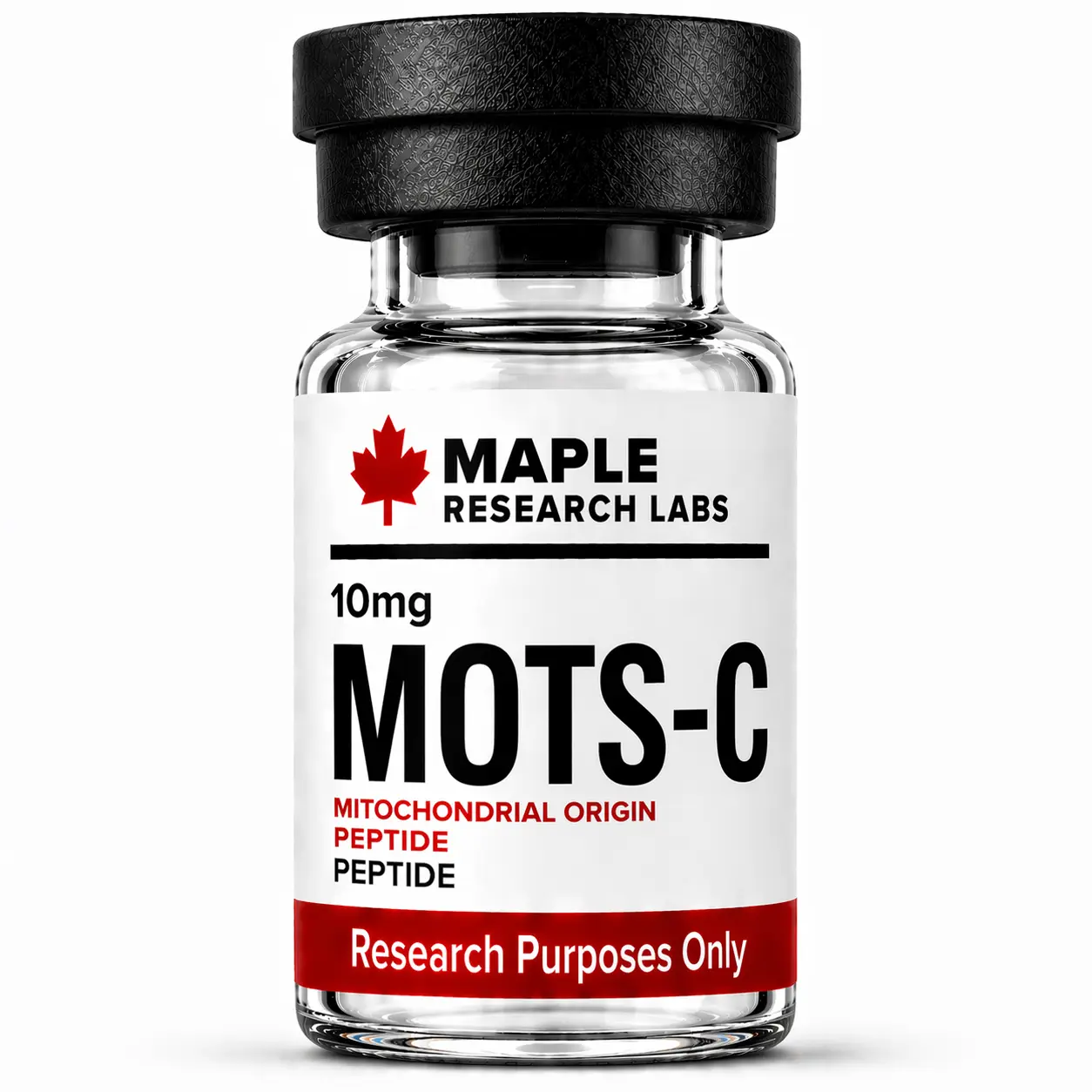
MOTS-C peptide Canada from Maple Research Labs offers 10mg of mitochondrial-derived research peptide with verified purity for qualified investigators.
Compound: MOTS-C
CAS Number: 1627580-64-6
Molecular Formula: C101H152N28O22S2
Purity: 99.69% (HPLC-UV verified)
Third-Party Testing: Testides Analytical (independent lab, Prague)
COA Verification: Testides.com/verify
Batch: MRL-MOT-0326
Source: Canadian manufactured
Shipping: Same-day from our BC facility
MOTS-C peptide Canada: a mitochondrial-derived peptide encoded within the 12S rRNA gene of mitochondrial DNA. This research compound is available from Maple Research Labs at 10mg per vial with greater than 99%+ HPLC-verified purity and batch-specific COA.
Product Specifications
- Sequence Length: 16 amino acids
- Origin: Mitochondrial genome (12S rRNA)
- Molecular Weight: Approximately 2174 Da
- Purity: >99%+ (HPLC verified)
- Form: Lyophilized powder
- Quantity: 10mg per vial
MOTS-C Peptide Canada Research Summary
MOTS-C (Mitochondrial Open Reading Frame of the Twelve S rRNA type-c) is a 16-amino acid peptide discovered in 2015 by Dr. Changhan Lee’s research group at the University of Southern California. It is encoded within the mitochondrial genome, making it one of several mitochondrial-derived peptides (MDPs) identified as potential signaling molecules between mitochondria and the nuclear genome. The MOTS-C peptide Canada product enables researchers to study this retrograde signaling pathway.
MOTS-C is distinguished from other mitochondrial-derived peptides such as humanin and SHLPs by its unique origin within the 12S rRNA gene and its documented effects on cellular metabolism and AMPK pathway activation in published preclinical studies.
Mechanism of Action Research
Research has identified MOTS-C as an activator of the AMPK (AMP-activated protein kinase) signaling pathway, a central regulator of cellular energy homeostasis. Published studies have demonstrated that MOTS-C treatment in cell culture models leads to AMPK phosphorylation, which in turn modulates downstream targets involved in glucose uptake, fatty acid oxidation, and mitochondrial biogenesis.
The proposed mechanism involves MOTS-C’s interference with the folate cycle and de novo purine biosynthesis, leading to accumulation of the AMPK-activating metabolite AICAR (5-aminoimidazole-4-carboxamide ribonucleotide). This metabolic pathway disruption results in indirect AMPK activation rather than direct kinase binding, representing a distinctive mechanism compared to pharmacological AMPK activators.
In vitro studies have also demonstrated that MOTS-C can translocate to the nucleus under conditions of metabolic stress, where it interacts with nuclear DNA and regulates adaptive gene expression. This nuclear translocation represents a novel form of mitochondria-to-nucleus communication that has generated significant research interest in the mitochondrial biology field.
Preclinical Study Summary
Published preclinical studies have examined MOTS-C in the context of metabolic research, exercise physiology models, and aging biology. Animal model investigations have explored its effects on glucose metabolism, insulin sensitivity, and body composition in diet-induced obesity models. The peptide’s role in exercise-induced metabolic adaptations has been studied in rodent exercise protocols.
MOTS-C levels have been reported to decline with age in both rodent and human plasma samples, paralleling observations made with other mitochondrial-derived peptides. This age-related decline has positioned MOTS-C as a compound of interest in geroscience research.
All findings are from preclinical research. Researchers should consult primary sources for protocols.
References
MOTS-C Peptide Canada Quality Assurance
Verified products of MOTS-C peptide Canada from Maple Research Labs undergoes independent third-party HPLC analysis confirming purity exceeding 99%+. Each order includes a batch-specific COA with retention time data, purity percentage, and mass spectrometry identity confirmation. Our quality pipeline verifies the complete 16-amino acid sequence integrity of this mitochondrial-derived peptide across all production batches.
Storage and Handling
Store lyophilized at -20C. Reconstituted at 2-8C, use within 30 days. Avoid freeze-thaw cycles and light.
Shipping
Ships same-day from our Canadian facility. Temperature-controlled packaging included.
Certificate of Analysis (COA)
| Testing Laboratory | Testides (testides.com) |
| Report Number | DBAV-MOTS-10-051226-02 |
| Purity (HPLC-UV) | 99.69% |
| Fill Accuracy | 108.2% (10.82mg measured / 10.00mg expected) |
| Date Tested | May 23, 2026 |
| Download COA | Download Full COA (PDF) |
For research purposes only. Not for human consumption. Not for diagnostic or therapeutic use.
Related Research Articles
- MOTS-C vs Glutathione: Mitochondrial Research
- NAD+ vs Glutathione: Key Research Compounds in Cellular Studies
- Certificates of Analysis (COA) Documentation
- Browse All Research Peptides
Frequently Asked Questions
What is the CAS number for MOTS-C?
The CAS registry number for MOTS-C is 1627580-64-6. It is a mitochondria-derived peptide encoded by the 12S rRNA gene.
What is MOTS-C purity?
Batch MRL-MOT-0326 tested at 98.6% purity by independent HPLC at Testides Analytical.
What research areas involve MOTS-C?
MOTS-C has been studied in the context of metabolic regulation, AMPK pathway activation, insulin sensitivity, and exercise physiology in animal models.
Related Research Peptides from Maple Research
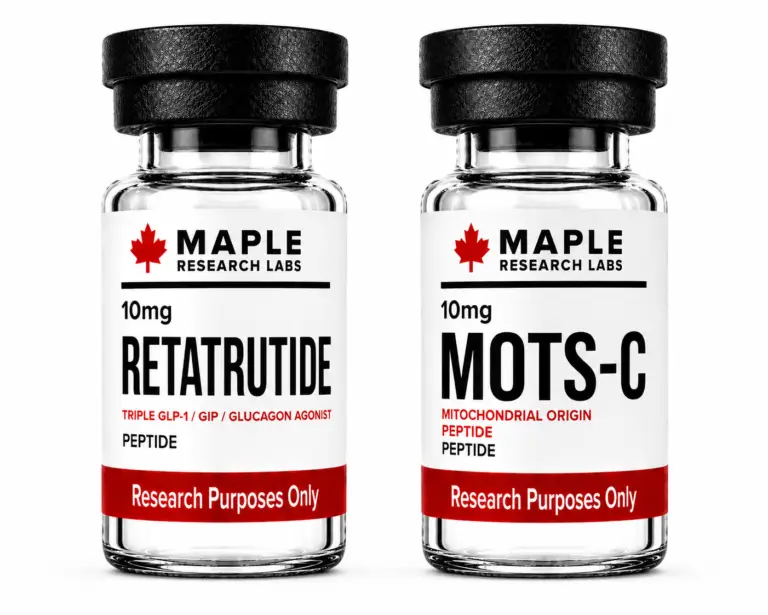
Researchers may also be interested in Tesamorelin 5MG, Retatrutide 10MG, and bacteriostatic water. All products are shipped same-day from Canada with third-party purity verification.
Want more research like this?
Weekly peptide study breakdowns. No spam. Unsubscribe anytime.


Reviews
There are no reviews yet.