 Maple
Maple 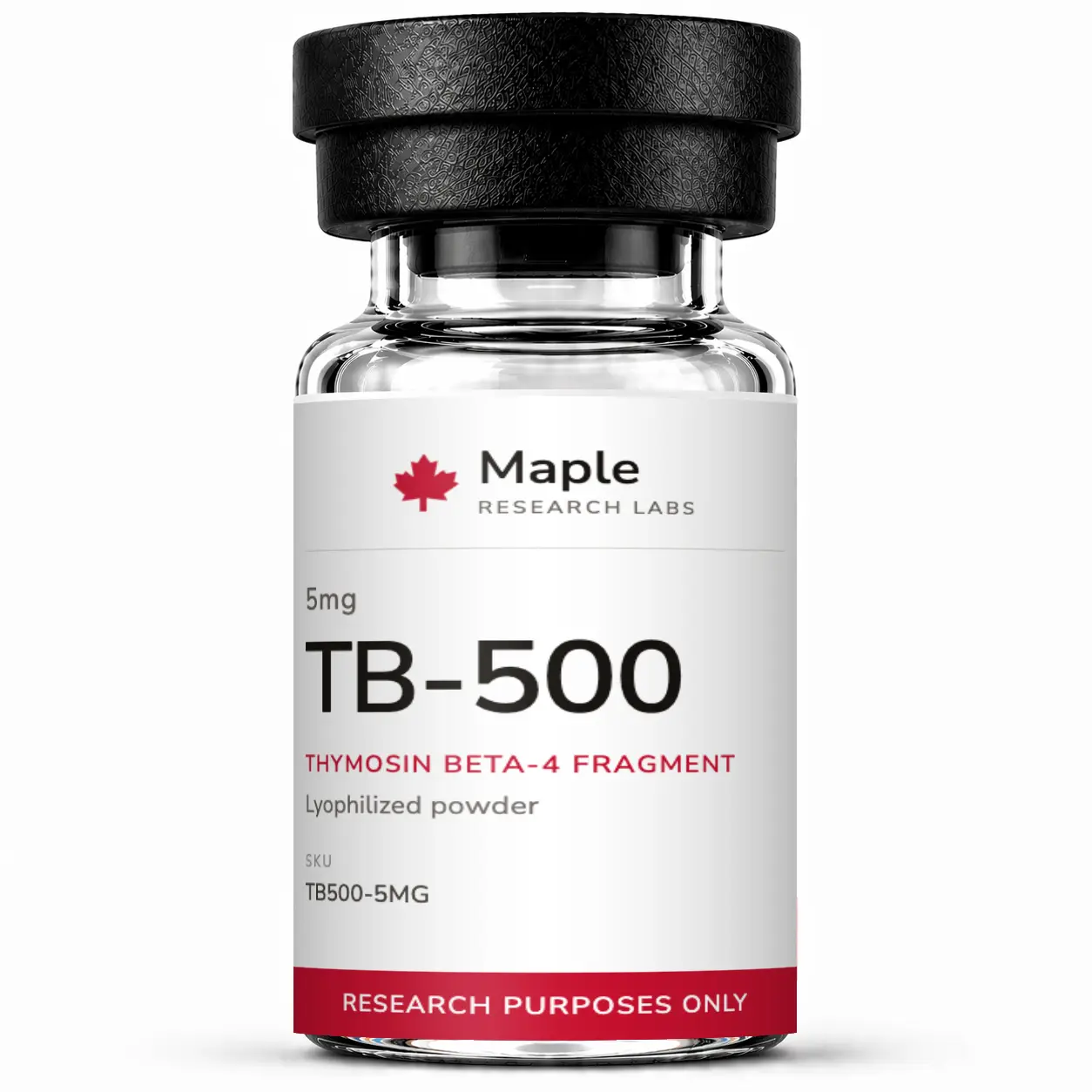
TB-500 peptide Canada: a synthetic version of a 43-amino acid region of Thymosin Beta-4 (TB4), a naturally occurring protein involved in cell migration and differentiation research. Available from Maple Research Labs. Published third-party analytical reports for tested batches are indexed on our Certificates of Analysis page.
Product Specifications
- Sequence Region: Thymosin Beta-4 active fragment
- Molecular Weight: Approximately 4963 Da
- Purity: Minimum 98% by HPLC-UV
- Form: Lyophilized powder
- Quantity: 5mg per vial
TB-500 Peptide Canada Research Summary
TB-500 is a synthetic peptide representing the active region of Thymosin Beta-4, a 43-amino acid protein that is expressed in virtually all mammalian cell types. Thymosin Beta-4 was first isolated from calf thymus tissue and has since been identified as one of the most abundant intracellular peptides in mammalian systems. The TB-500 peptide Canada product contains the key actin-binding domain responsible for many of the observed biological activities in research settings.
Research has focused on TB-500’s interaction with globular actin (G-actin), which plays a central role in cytoskeletal dynamics. Published studies have demonstrated that Thymosin Beta-4 promotes actin polymerization and cell motility in multiple cell types, including endothelial cells, keratinocytes, and fibroblasts.
Mechanism of Action Research
The primary molecular mechanism under investigation involves TB-500’s ability to sequester G-actin monomers, thereby regulating the actin cytoskeleton dynamics essential for cell migration and morphogenesis. The key active sequence (LKKTETQ) within TB-500 has been identified as the domain responsible for actin binding activity observed in in vitro assays.
Published preclinical studies have examined TB-500 in the context of wound repair models, cardiac tissue research, and inflammatory response modulation. In rodent models, researchers have reported observations related to dermal wound closure rates, hair follicle stem cell migration, and vascular development. In vitro studies have demonstrated effects on endothelial cell migration and differentiation in tube formation assays.
Additional research has investigated the relationship between Thymosin Beta-4 and various signaling pathways, including the Akt/PI3K pathway and modulation of inflammatory mediators. Studies in cardiac tissue models have examined the peptide’s interactions with epicardial progenitor cell populations.
Preclinical Study Summary
TB-500 and its parent protein Thymosin Beta-4 have been the subject of extensive preclinical investigation. Published research spans wound healing models, cardiac tissue studies, ocular surface research, and musculoskeletal injury models in rodents. The peptide’s well-characterized interaction with the actin cytoskeleton has made it a valuable research tool for studying cell migration and tissue repair mechanisms.
All published findings referenced here are based on animal models and in vitro systems. Researchers should consult primary literature sources for experimental protocols and complete findings.
References
TB-500 Peptide Canada Quality Assurance
Verified products of TB-500 peptide Canada from Maple Research Labs undergoes independent third-party HPLC analysis confirming purity meeting a minimum 98% specification. Each order includes a batch-specific COA with retention time data, purity percentage, and measured fill accuracy against label claim. Our seven-stage quality pipeline ensures consistent purity from raw material sourcing through final lyophilization and packaging for this research-grade Thymosin Beta-4 fragment product.
Storage and Handling
Store lyophilized TB-500 peptide at -20C for long-term storage. Once reconstituted, store at 2-8C and use within 28 days. Avoid repeated freeze-thaw cycles. Keep away from direct light and moisture.
Shipping
Ships same-day from our Canadian facility. All orders include temperature-controlled packaging.
Certificate of Analysis (COA)
| Testing Laboratory | Independent third-party laboratory |
| Report Number | Available on request |
| Purity (HPLC-UV) | Published on the batch COA |
| Fill Accuracy | Published on the batch COA |
| Date Tested | May 23, 2026 |
| Download COA | Batch COA available on request |
For research purposes only. Not for human consumption. Not for diagnostic or therapeutic use.
Related Research Articles
- BPC-157 vs TB-500: Research Comparison
- TB-500 vs BPC-157/TB-500 Blend: Research Comparison
- Understanding Peptide Purity: Why It Matters for Research
- Certificates of Analysis (COA) Documentation
- Browse All Research Peptides
Frequently Asked Questions
What is the CAS number for TB-500?
The CAS registry number for TB-500 (Thymosin Beta-4 fragment) is 77591-33-4. TB-500 is the synthetic version of the naturally occurring 43-amino acid peptide Thymosin Beta-4.
How is TB-500 purity tested?
TB-500 purity is verified by independent HPLC-UV analysis. The measured result for the lot currently shipping is published on its batch COA.
How should TB-500 be stored?
Store lyophilized TB-500 at -20C for long-term storage (18+ months stability). Once reconstituted, store at 2-8C and use within 21 days. TB-500 is a larger peptide and slightly less stable in solution than smaller compounds.
What is TB-500 studied for in research?
TB-500 has been studied for its role in cell migration, blood vessel formation, and tissue repair in animal models. Research has focused on its interaction with actin, a key protein in cell structure and motility.
Related Research Peptides from Maple Research
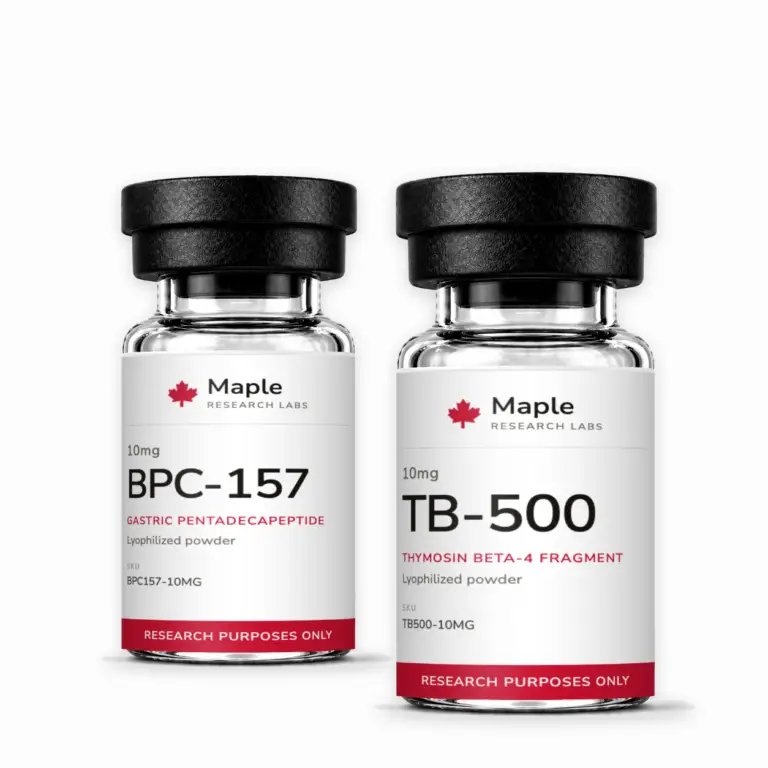
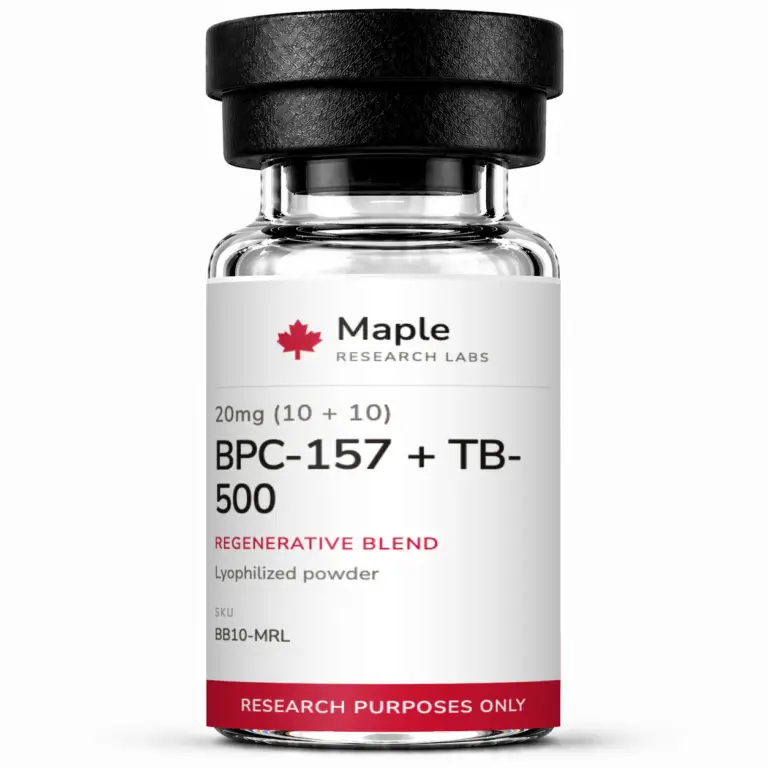
Researchers may also be interested in TB-500 10MG, BPC-157 + TB-500 Blend, and BPC-157 10MG. All products are shipped same-day from Canada with third-party purity verification.
15% off your first order
Join the research list and we will email your code. New arrivals, current pricing, and research breakdowns. Unsubscribe anytime.