Maple Research Labs Maple Research Labs
Tested & Vialed in BC
>98% Purity
3rd Party COA Testing
Same-Day Shipping
Menu
Browse Research Compounds

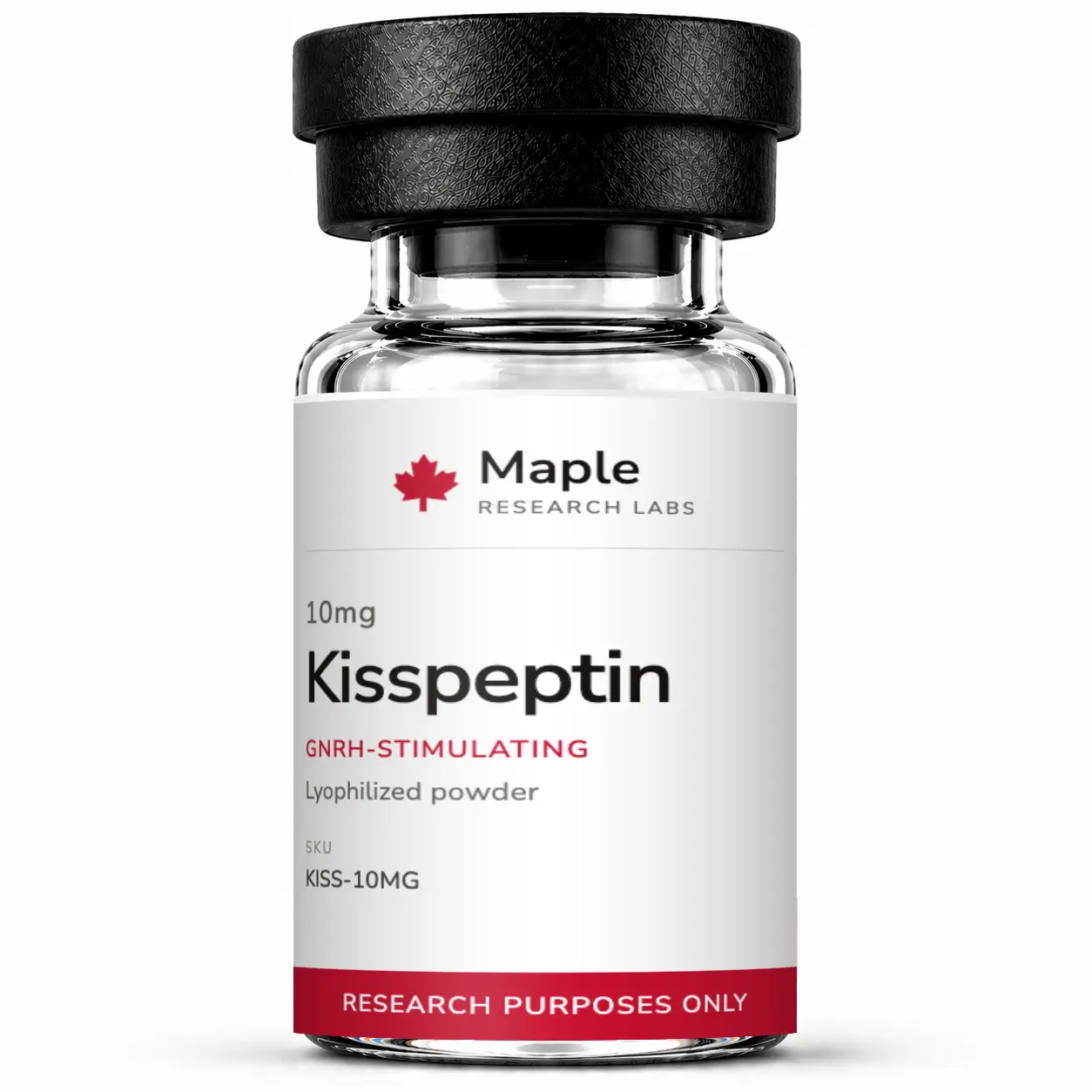
Kisspeptin 10MG

$80.00

Research Compound Summary
Compound: Kisspeptin
CAS Number: 374675-21-5
Molecular Formula: C63H83N17O14
Purity: 99.91% (HPLC-UV verified)
Third-Party Testing: Independent third-party laboratory
COA Download: View Full COA (PDF)
Report: DBAV-KISS-10-062226
Source: Internationally synthesized, tested and vialed in Canada
Shipping: Same-day from BC

99.91%
PURITY
HPLC-UV tested, third party verified.
This batch, not a typical result. View the batch certificate
Verify this batch yourself
The analysis report is published by the testing laboratory on its own site, not ours: DBAV-KISS-10-062226.
SKU: KISS-10MG Category:

Kisspeptin peptide is the KISS1 gene product that activates GPR54 (KISS1R) on gonadotropin-releasing hormone neurons, making it the upstream gatekeeper of the hypothalamic-pituitary-gonadal axis. The 10mg vial supplied here is kisspeptin-10, the C-terminal decapeptide fragment, tested at 99.91% purity by HPLC-UV under third-party report DBAV-KISS-10-062226. Supplied for laboratory research use only.

Compound Identity

Kisspeptin-10 corresponds to residues 112 to 121 of the 145 amino acid KISS1 precursor protein and carries the sequence Tyr-Asn-Trp-Asn-Ser-Phe-Gly-Leu-Arg-Phe-NH2. The C-terminal amidated Arg-Phe motif places it in the RFamide peptide family and is required for receptor binding. CAS number 374675-21-5, molecular formula C63H83N17O14. Longer endogenous forms including kisspeptin-54 (metastin), kisspeptin-14 and kisspeptin-13 share this same C-terminal decapeptide and show comparable receptor affinity in binding assays, which is why kisspeptin-10 is the fragment most often used in receptor pharmacology work.

Mechanism of Action

Ohtaki and colleagues (2001) and Kotani and colleagues (2001) independently identified the KISS1 gene product as the endogenous ligand for the orphan receptor GPR54. GPR54 couples through Gq/11, activating phospholipase C beta, generating inositol trisphosphate and diacylglycerol, mobilising intracellular calcium and driving ERK1/2 phosphorylation. In hypothalamic tissue this cascade depolarises GnRH neurons and triggers GnRH secretion, which in turn drives luteinising hormone and follicle-stimulating hormone release from the anterior pituitary.

Messager and colleagues (2005) demonstrated in rodent models that the effect is direct at the GnRH neuron rather than downstream at the pituitary, since the gonadotropin response to kisspeptin was abolished by GnRH receptor antagonism. Kisspeptin-expressing neurons in the arcuate nucleus co-express neurokinin B and dynorphin, the population described in the literature as KNDy neurons, and this circuit is the current model for how pulsatile GnRH output is generated in animal studies.

Research Background

Interest in this receptor system began with human genetics rather than pharmacology. De Roux and colleagues (2003) and Seminara and colleagues (2003) reported that loss-of-function mutations in GPR54 segregate with idiopathic hypogonadotropic hypogonadism, establishing the receptor as necessary for normal reproductive axis development. Gottsch and colleagues (2004) followed with rodent work showing that exogenous kisspeptin-10 stimulates gonadotropin secretion, and the compound has since become a standard tool in neuroendocrine laboratories studying puberty onset, seasonal reproduction, metabolic gating of fertility, and the leptin signalling that links energy status to the reproductive axis. KISS1 was originally characterised as a metastasis suppressor gene, and a separate oncology literature continues to examine the same peptide in cell migration models.

Researchers comparing points of intervention in this axis often work with kisspeptin-10 alongside a GnRH receptor agonist, since the two act at adjacent nodes. Our gonadorelin and GnRH receptor pharmacology overview covers the downstream step. A fuller account of GPR54 signalling, KNDy circuitry and the published preclinical record is available in our kisspeptin-10 research article.

Analytical Verification

This batch was analysed by an independent third-party laboratory and returned 99.91% purity by HPLC-UV under report DBAV-KISS-10-062226. The certificate is downloadable from the product summary above, and the full catalogue index is on our certificates of analysis page. If you are new to reading chromatographic purity data, our guide to HPLC testing and what the purity figure actually measures explains what the number does and does not tell you about a lyophilized sample.

Storage and Handling

Supplied as a lyophilized powder. Store sealed vials at minus 20 degrees Celsius for long-term storage, or 2 to 8 degrees Celsius for short-term. Protect from light and moisture, and allow vials to equilibrate to room temperature before opening to limit condensation. Kisspeptin-10 contains tryptophan and is light sensitive in solution, so reconstituted material should be protected from light and handled according to your laboratory’s own validated procedures.

Shipping

Same-day dispatch on orders placed before 12 PM Pacific, shipping across Canada. Full ordering and documentation details are on our documentation page, and the complete catalogue is at research peptides.

For research purposes only. Not for human consumption. Not for diagnostic or therapeutic use.

% off your first order

Join the research list and we will email your code. New arrivals, current pricing, and research breakdowns. Unsubscribe anytime.

Pack size

Single vial, 10-pack

You may also like…

Shopping Cart

Maple Research Labs

Canadian supplier of high-purity research compounds for laboratory and scientific applications.

BC Facility, British Columbia, Canada

[email protected]
For Research Purposes Only. All products sold by Maple Research Labs are intended for laboratory research use only. Not for human consumption.
© 2026 Maple Research LabsPrivacy Policy | Legal | Refunds | Terms
Scroll to Top