 Maple
Maple Research peptides are short-chain amino acid sequences, typically 2 to 50 amino acids in length, that occupy a distinct position among biomedical research tools due to their synthesis methods, receptor selectivity, metabolic stability profiles, and regulatory classification relative to small molecules, proteins, and nucleotides. Understanding where peptides sit in relation to these other compound categories helps researchers select appropriate tools for their experimental objectives and anticipate relevant analytical considerations.
Compound classification also carries governance implications, examined further in our discussion of ethical considerations in peptide research.
For research purposes only. Not for human consumption. Not for diagnostic or therapeutic use.
What Defines a Research Peptide
In biochemical terms, peptides are polymers of amino acids connected by amide bonds between the alpha-carboxyl group of one residue and the alpha-amino group of the next. The boundary between peptides and proteins is not universally fixed, but most pharmacological and analytical frameworks treat compounds below approximately 50 amino acids or 5,000 daltons as peptides. Above that threshold, compounds enter protein territory with distinct folding, immunogenicity, and production requirements.
Research peptides are typically produced through solid-phase peptide synthesis (SPPS), a stepwise chemical process that builds the amino acid chain on a resin support. This approach allows precise control over sequence composition, introduction of non-natural amino acids, and structural modifications such as cyclization, PEGylation, or lipidation. The synthetic origin distinguishes research peptides from naturally derived proteins and most nucleotide-based research tools.
Purity is a central quality parameter for research peptides. HPLC analysis and, where performed, mass spectrometry identity confirmation appear on the batch Certificate of Analysis. Understanding how to read a COA is foundational for evaluating any peptide supplier. The degree to which synthesis-related impurities such as truncations, racemization products, and oxidation variants are controlled directly affects experimental reproducibility. For a detailed treatment of these analytical methods, see the overview of peptide impurity profiling.
Peptides vs Small Molecules
Small molecules are organic compounds with molecular weights typically below 500 daltons. Their compact size enables oral bioavailability and cell membrane permeability that peptides generally cannot achieve without structural modification.
The key distinctions in a research context are selectivity and mechanism accessibility. Peptides, by virtue of their larger contact surface area with target proteins, often achieve higher receptor selectivity than small molecules. A peptide that mimics an endogenous signaling molecule can engage its receptor through multiple interaction points simultaneously, reducing off-target binding. Small molecules typically occupy a defined binding pocket and may interact with structurally similar off-target proteins.
The tradeoff is metabolic stability. Peptides are substrates for proteases, resulting in shorter plasma half-lives when studied in animal models. Structural modifications address this: D-amino acid substitution, N-methylation, and backbone cyclization each reduce protease susceptibility. The retatrutide triple agonist research profile illustrates how multi-receptor engagement is achieved through deliberate structural engineering in the GLP-1 receptor agonist class. Researchers studying this mechanism can source retatrutide peptide with third-party verified purity documentation.
Peptides vs Recombinant Proteins
Proteins above the peptide size threshold are produced using recombinant expression systems. This production pathway introduces considerations absent from SPPS-derived peptides: glycosylation patterns depend on host cell type, immunogenicity risk increases with molecular weight, and batch-to-batch consistency requires careful bioprocess controls.
Peptides produced by SPPS are immune to glycosylation-related variability because the synthesis is purely chemical. For research applications requiring a precisely defined molecule, synthetic peptides offer reproducibility advantages over recombinant proteins of comparable biological function. The case for 98%+ HPLC purity is directly connected to this: a chemically defined peptide is only as reproducible as its purity allows.
Proteins retain advantages in studies requiring full tertiary structure, enzymatic activity, or protein-protein interaction surfaces that short peptide sequences cannot replicate.
Peptides vs Nucleotide-Based Research Tools
Antisense oligonucleotides, siRNA, and related nucleotide tools modulate gene expression at the transcript level rather than engaging protein receptors directly. These tools use phosphodiester or phosphorothioate backbones rather than amide bonds, and they are chemically distinct from amino acid-based peptides in both structure and mechanism.
Nucleotide tools operate upstream of protein expression, while peptides typically act at the receptor or enzyme level on already-synthesized proteins. Peptides that mimic receptor ligands can be applied and washed out rapidly, enabling acute pharmacological studies. Nucleotide-mediated gene silencing produces effects that persist through the life of the target protein pool. These tools address different questions and are frequently complementary rather than interchangeable in a research program.
Regulatory Classification in Canada
In Canada, research peptides sourced for in-vitro and preclinical laboratory use occupy a distinct classification from pharmaceutical drugs or natural health products approved for human use. Research-grade peptides are supplied with documentation supporting laboratory research application, including Certificates of Analysis. The regulatory status of a compound for research purposes does not imply any clinical or therapeutic approval.
Canadian domestic suppliers eliminate cross-border regulatory complexity. For context on the domestic supplier landscape, see the Canadian vs US research peptide supplier comparison.
Purity and Quality Documentation Across Compound Categories
Regardless of compound category, analytical documentation is the foundation of research reproducibility. For peptides, the minimum acceptable documentation is an HPLC purity trace and mass spectrometry identity confirmation from a third-party laboratory, with a batch number linking the document to the specific material supplied. The Maple Research Labs COA library makes this documentation available and verifiable for all supplied research peptides.
Across all compound categories, the governing principle is the same: analytical claims must be traceable to a specific batch and an independent testing source. Third-party verification of peptide purity data is addressed in detail in the role of third-party testing in quality assurance.
Selecting Between Compound Categories for Research
The practical choice between compound categories depends on the biological question, the target type, and the experimental model. For receptor pharmacology research where an endogenous peptide ligand is the physiological comparator, synthetic research peptides provide the closest structural correspondence. For gene-level manipulation, nucleotide tools are more appropriate. For screening large chemical space, small molecule libraries remain dominant.
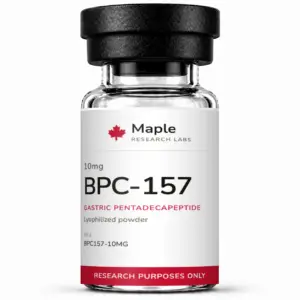
In metabolic and cardiovascular research, the GLP-1 receptor agonist peptide class has generated one of the most extensive preclinical evidence bases of any compound category, illustrating the mechanistic access that targeted synthetic peptides can provide. Commonly studied examples in this class include tirzepatide and BPC-157, both of which are available with batch-specific COA documentation. Browsing the full research peptide catalog alongside the research peptide comparison guide provides practical orientation to the compound space.
All compounds referenced in this article are intended for research purposes only. Not for human consumption. Not for diagnostic or therapeutic use. Researchers are responsible for compliance with all applicable regulations and institutional guidelines.
For peer-reviewed research on this topic, visit PubMed.
15% off your first order
Join the research list and we will email your code. New arrivals, current pricing, and research breakdowns. Unsubscribe anytime.