This reference guide provides a structured comparison of research peptides and compounds organized by their primary research categories. Each entry includes molecular targets, mechanisms of action, key research areas, approximate molecular weights, and notable properties relevant to laboratory work.
Incretin-based peptides and metabolic research compounds targeting GLP-1, GIP, and glucagon receptor pathways.
| Compound | Molecular Target / Mechanism | Key Research Areas | Mol. Weight | Notable Properties |
|---|---|---|---|---|
| Semaglutide | GLP-1 receptor agonist. Acylated GLP-1 analog with C-18 fatty diacid chain. | Metabolic signaling, glycemic regulation, body composition, cardiovascular risk factor modeling | ~4,114 Da | Long half-life (~7 days) due to albumin binding. 94% homology to native GLP-1. |
| Tirzepatide | Dual GIP/GLP-1 receptor agonist. 39-amino acid peptide. | Dual incretin pathway signaling, metabolic syndrome modeling | ~4,810 Da | First-in-class dual agonist. Biased agonism at GLP-1R. |
| Retatrutide | Triple agonist at GIP, GLP-1, and glucagon receptors. | Multi-receptor metabolic signaling, energy expenditure, hepatic lipid metabolism | ~4,828 Da | First triple agonist. Glucagon receptor activation engages hepatic energy expenditure. |
| Cagrilintide | Long-acting amylin receptor agonist. | Amylin signaling, satiety pathway modeling | ~3,960 Da | Targets area postrema amylin receptors. Studied in combination with semaglutide. |
| Survodutide | Dual GLP-1/glucagon receptor agonist. | Hepatic lipid metabolism, steatosis models, energy expenditure | ~4,200 Da | Glucagon component promotes hepatic lipid oxidation. |
| Mazdutide | Dual GLP-1/glucagon receptor agonist with C-18 fatty acid modification. | Metabolic signaling, glucagon pathway research | ~4,200 Da | Structurally related to oxyntomodulin. |
| GLP-1 (7-36) | Native incretin hormone. Binds GLP-1R, activating cAMP/PKA. | Incretin physiology baseline, receptor binding assays | ~3,298 Da | Very short half-life (~2 min). Useful as reference standard. |
| AOD-9604 | Modified hGH fragment (176-191). Does not bind GH receptor. | Adipose tissue lipolysis, lipid metabolism, cartilage repair | ~1,815 Da | Lacks growth-promoting activity of full-length GH. |
Growth hormone-releasing peptides (GHRPs) and GHRH analogs acting on pituitary somatotrophs through distinct receptor mechanisms.
| Compound | Molecular Target / Mechanism | Key Research Areas | Mol. Weight | Notable Properties |
|---|---|---|---|---|
| Ipamorelin | Selective GHS-R1a (ghrelin receptor) agonist. Pentapeptide. | Pulsatile GH release, somatotroph signaling, bone density | ~711 Da | High selectivity. No significant effect on ACTH, cortisol, or prolactin. |
| CJC-1295 (No DAC) | GHRH analog (Mod-GRF 1-29). Binds GHRH receptor. | GH axis stimulation, pulsatile release, synergy with GHRPs | ~3,367 Da | Short half-life (~30 min). Preserves pulsatile GH release. |
| CJC-1295 DAC | GHRH analog with Drug Affinity Complex for albumin binding. | Sustained GH elevation, IGF-1 level research | ~3,647 Da | Extended half-life (~8 days). Non-pulsatile GH elevation. |
| CJC-1295/Ipamorelin Blend | Combined GHRH analog + GHRP. Dual receptor activation. | Synergistic GH release modeling | ~3,367 + ~711 Da | Exploits synergistic amplification of GH release. |
| GHRP-2 | GHS-R1a agonist. Hexapeptide. | GH secretion, appetite signaling, cortisol co-release | ~818 Da | Strongest GH-releasing hexapeptide. Also stimulates ACTH/cortisol. |
| GHRP-6 | GHS-R1a agonist. Strong ghrelin-mimetic. | GH secretion, appetite and gastric motility | ~873 Da | Pronounced appetite stimulation. First synthetic GHRP discovered. |
| Sermorelin | GHRH (1-29) analog. Shortest bioactive GHRH fragment. | GH axis stimulation, age-related GH decline | ~3,358 Da | Full receptor binding activity. Short half-life (~10-20 min). |
| Tesamorelin | GHRH analog with trans-3-hexenoic acid modification. | GH axis, visceral adiposity models | ~5,136 Da | Longer-acting than Sermorelin. Studied in visceral fat models. |
| HGH 191AA | Recombinant human growth hormone. 191-amino acid polypeptide. Activates JAK2/STAT5. | GH/IGF-1 axis, receptor binding assays | ~22,124 Da | Identical to endogenous hGH. Requires cold-chain storage. |
Peptides investigated for roles in tissue protection, wound healing, inflammatory modulation, and extracellular matrix remodeling.
| Compound | Molecular Target / Mechanism | Key Research Areas | Mol. Weight | Notable Properties |
|---|---|---|---|---|
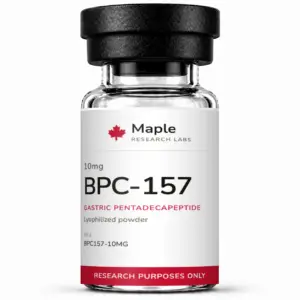
| BPC-157 | Pentadecapeptide from gastric juice protein. VEGF upregulation, NO modulation, FAK-paxillin activation. | GI cytoprotection, tendon/ligament healing, angiogenesis, neuroprotection | ~1,419 Da | Stable in gastric acid. 20+ years of rodent literature. |
| TB-500 | Active fragment of Thymosin Beta-4. Sequesters G-actin, promotes cell migration. | Wound healing, cardiac repair, anti-inflammatory signaling | ~1,751 Da | Upregulates in tissue injury. Crosses blood-brain barrier. |
| BPC-157 + TB-500 Blend | Combined gastric pentadecapeptide + thymosin fragment. Complementary pathways. | Synergistic tissue repair modeling | ~1,419 + ~1,751 Da | Combines cytoprotective/angiogenic with actin-mediated migration. |
| KPV | C-terminal tripeptide of alpha-MSH. NF-kB inhibition, PGE2 reduction. | IBD models, mucosal inflammation, antimicrobial signaling | ~342 Da | Anti-inflammatory without melanocortin receptor binding. |
| GHK-Cu | Copper-binding tripeptide. Modulates growth factors, TGF-beta, collagen, MMPs. | Wound healing, collagen remodeling, gene expression reprogramming | ~403 Da | Modulates ~4,000 genes. Dual role as copper delivery vehicle. |
| LL-37 | 37-aa cathelicidin antimicrobial peptide. Disrupts microbial membranes, modulates TLR signaling. | Antimicrobial research, innate immunity, biofilm disruption | ~4,493 Da | Only human cathelicidin. Active against bacteria, fungi, enveloped viruses. |
Peptides targeting the melanocortin receptor system (MC1R-MC5R), regulating pigmentation, sexual function, inflammation, and energy homeostasis.
| Compound | Molecular Target / Mechanism | Key Research Areas | Mol. Weight | Notable Properties |
|---|---|---|---|---|
| Melanotan 1 | Linear alpha-MSH analog. Non-selective with high MC1R affinity. | MC1R signaling, eumelanin synthesis, photoprotection | ~1,647 Da | More potent than native alpha-MSH. Primarily MC1R-driven. |
| Melanotan 2 | Cyclic heptapeptide. Non-selective agonist at MC1R, MC3R, MC4R, MC5R. | Melanocortin pharmacology, pigmentation, sexual function (MC4R) | ~1,024 Da | Cyclic structure increases stability. Broad receptor profile. |
| PT-141 (Bremelanotide) | Cyclic heptapeptide. MC3R/MC4R agonist. Metabolite of MT-2. | MC4R-mediated sexual function, CNS melanocortin pathways | ~1,025 Da | Acts centrally via MC4R. Minimal MC1R activity vs MT-2. |
Peptides studied for effects on CNS function including cognitive performance, anxiolytic signaling, neuroprotection, and sleep architecture.
| Compound | Molecular Target / Mechanism | Key Research Areas | Mol. Weight | Notable Properties |
|---|---|---|---|---|
| Selank | Synthetic tuftsin analog. Modulates BDNF, serotonin, dopamine. Inhibits enkephalinase. | Anxiolytic signaling, cognitive function, immune modulation | ~751 Da | No sedation in animal models. Combines immunomodulatory + anxiolytic. |
| Semax | ACTH (4-10) analog. Activates BDNF/TrkB, modulates monoamine signaling. | Neuroprotection, cognitive enhancement, cerebrovascular research | ~813 Da | Lacks adrenocorticotropic activity. Enhances BDNF in hippocampus. |
| DSIP | Nonapeptide. Modulates sleep-wake cycles and stress response. | Sleep architecture, stress-response, circadian rhythm | ~849 Da | Crosses blood-brain barrier. Affects LH, cortisol, somatostatin. |
| Pinealon | Tripeptide (Glu-Asp-Arg). Khavinson bioregulator for pineal gland. | Pineal function, circadian regulation, neuroprotection | ~390 Da | Ultra-short peptide with proposed gene-regulatory activity. |
| Cerebrolysin | Enzymatic mixture of neuropeptides from porcine brain. Contains neurotrophic factor fragments. | Neurotrophic signaling, neuroplasticity, neurodegenerative models | ~10 kDa max | Standardized peptide preparation. 200+ published studies. |
Compounds studied in aging biology, mitochondrial function, telomere maintenance, cellular senescence, and immune reconstitution.
| Compound | Molecular Target / Mechanism | Key Research Areas | Mol. Weight | Notable Properties |
|---|---|---|---|---|
| Epithalon | Tetrapeptide. Activates telomerase via hTERT upregulation. | Telomere biology, telomerase activation, melatonin production, aging | ~390 Da | Increases telomerase activity in human somatic cells in vitro. |
| MOTS-C | Mitochondrial-derived peptide (16 aa). Activates AMPK, regulates folate-methionine metabolism. | Mitochondrial signaling, metabolic homeostasis, exercise mimetic | ~2,174 Da | First mitochondrial peptide shown to regulate nuclear gene expression. |
| NAD+ | Essential coenzyme for redox reactions, sirtuin activity, PARP DNA repair. | Cellular energetics, sirtuin pathways, DNA repair, metabolic aging | ~663 Da | Not a peptide. Central to longevity research. Declines with age. |
| SS-31 (Elamipretide) | Tetrapeptide targeting cardiolipin in inner mitochondrial membrane. | Mitochondrial dysfunction, heart failure, renal ischemia | ~640 Da | Concentrates >1000-fold in mitochondria. Szeto-Schiller peptide. |
| FOXO4-DRI | D-retro-inverso peptide disrupting FOXO4-p53 interaction in senescent cells. | Cellular senescence, senolytic research, p53 pathway | ~4,842 Da | First peptide-based senolytic. Selectively targets senescent cells. |
| Thymosin Alpha-1 | 28-aa peptide. Activates TLR2/TLR9, promotes dendritic cell maturation. | Immune reconstitution, vaccine adjuvant, T-cell differentiation | ~3,108 Da | Approved in 35+ countries. Enhances innate and adaptive immunity. |
| Thymalin | Polypeptide complex from calf thymus. T-cell maturation, thymic restoration. | Thymic involution, immune aging, T-cell restoration | Variable | Multi-component thymic extract. Studied in longitudinal aging trials. |
Peptides and glycoprotein hormones central to hypothalamic-pituitary-gonadal (HPG) axis research.
| Compound | Molecular Target / Mechanism | Key Research Areas | Mol. Weight | Notable Properties |
|---|---|---|---|---|
| HCG | Glycoprotein hormone. Binds LH/CG receptor, activates cAMP/PKA. | Gonadal steroidogenesis, Leydig cell function, LH receptor signaling | ~36,700 Da | Longer half-life than LH (~24-36 hrs vs ~20 min). |
| HMG | Purified preparation containing FSH and LH activity. | Folliculogenesis, spermatogenesis, dual gonadotropin signaling | ~30-35 kDa | Contains both gonadotropin activities. |
| Gonadorelin | Synthetic GnRH decapeptide. Triggers LH and FSH release. | HPG axis function, pulsatile GnRH signaling | ~1,182 Da | Identical to endogenous GnRH. Very short half-life (~2-4 min). |
| Kisspeptin-10 | Decapeptide binding KISS1R (GPR54). Master upstream regulator of GnRH neurons. | GnRH neuron activation, puberty onset, reproductive neuroendocrinology | ~1,302 Da | Most upstream known activator of reproductive axis. |
| Oxytocin | Cyclic nonapeptide. Binds OXTR (Gq-coupled GPCR). | Social behavior, uterine contractility, lactation, stress response | ~1,007 Da | Disulfide bridge creates cyclic structure. Similar to vasopressin. |
| Triptorelin | GnRH agonist with D-Trp6. Initial stimulation then receptor desensitization. | GnRH receptor downregulation, gonadotropin suppression | ~1,312 Da | 100x more potent than native GnRH. D-amino acid confers resistance. |
Diverse research compounds spanning small molecules, peptide fragments, growth factors, and bioregulatory peptides.
| Compound | Molecular Target / Mechanism | Key Research Areas | Mol. Weight | Notable Properties |
|---|---|---|---|---|
| 5-Amino-1MQ | NNMT inhibitor. Increases intracellular NAD+. | NNMT inhibition, NAD+ metabolism, adipocyte differentiation | ~173 Da | Small molecule, not a peptide. Cell-permeable. |
| AICAR | AMPK activator. Converted to ZMP (AMP mimetic). | AMPK signaling, exercise mimetic, glucose uptake | ~258 Da | Nucleoside analog. First pharmacological AMPK activator. |
| Adipotide | Chimeric peptide targeting prohibitin on adipose vasculature. | Adipose vasculature targeting, vascular-targeted apoptosis | ~2,462 Da | “Vascular zip code” peptide targeting white adipose blood supply. |
| Snap-8 | Octapeptide antagonist of SNAP-25 in SNARE complex. | Neuromuscular junction, SNARE modulation, cosmeceutical | ~1,075 Da | Extension of Argireline sequence. Topical delivery research. |
| IGF-1 LR3 | 83-aa IGF-1 analog. Reduced IGFBP affinity. Activates PI3K/Akt. | IGF-1R signaling, cell proliferation, muscle hypertrophy | ~9,111 Da | ~3x more potent than native IGF-1 due to reduced IGFBP binding. |
| IGF-DES | Truncated IGF-1 (lacks first 3 aa). Minimal IGFBP binding. | IGF-1R signaling, local growth factor modeling | ~7,372 Da | ~10x more potent at receptor level. Very short half-life. |
| MGF | IGF-1 splice variant. Activates satellite cell proliferation. | Muscle satellite cells, mechanotransduction, damage-repair | ~2,867 Da | Expressed after mechanical loading. Does not bind IGFBPs. |
| PEG-MGF | PEGylated MGF. Extended serum half-life. | Extended-duration MGF signaling, PEGylation pharmacokinetics | ~5,000+ Da | PEGylation reduces renal clearance and protease degradation. |
| Dermorphin | Heptapeptide. Highly selective mu-opioid receptor agonist. | Mu-opioid pharmacology, receptor binding assays | ~803 Da | 30-40x more potent than morphine at mu receptors. Contains D-Ala2. |
| Ara-290 | Selective agonist of innate repair receptor (EPOR/CD131 heterodimer). | Innate repair signaling, neuroprotection, anti-inflammatory | ~1,258 Da | Tissue-protective without erythropoietic activity. |
| PNC-27 | Chimeric peptide. Binds HDM-2 on transformed cell surfaces. | Selective membranolysis, HDM-2 surface expression | ~3,200 Da | Selectively kills cells with external membrane HDM-2. |
| SLU-PP-332 | Pan-ERR agonist. Activates mitochondrial gene programs. | ERR pathway, exercise mimetic, mitochondrial biogenesis | ~425 Da | Small molecule. Increased endurance in mouse models. |
| Testagen | Tetrapeptide Khavinson bioregulator for testicular function. | Testicular bioregulation, reproductive aging | ~433 Da | Ultra-short peptide with oral stability. |
| Cartalax | Tripeptide Khavinson bioregulator for cartilage. | Cartilage bioregulation, musculoskeletal aging | ~319 Da | Proposed epigenetic mechanism via DNA interaction. |
| Vesugen | Tripeptide Khavinson bioregulator for vascular endothelium. | Vascular bioregulation, endothelial function, cardiovascular aging | ~390 Da | Vascular tissue-specific gene regulation. |
| Vilon | Dipeptide (Lys-Glu). Shortest Khavinson bioregulator. Thymic/immune modulation. | Thymic bioregulation, immune function, peptide-DNA interaction | ~275 Da | Simplest bioregulator (2 amino acids). Immune reconstitution. |
| VIP | 28-aa neuropeptide. Binds VPAC1/VPAC2, activates cAMP/PKA. | Neuroprotection, intestinal motility, circadian rhythm, vasodilation | ~3,326 Da | Pleiotropic. Key role in SCN circadian signaling. |
| EPO 3000 | Recombinant erythropoietin. Binds EPOR, activates JAK2/STAT5. | Erythropoiesis, EPOR signaling, hematopoietic differentiation | ~30,400 Da | 165-aa glycoprotein. Also has tissue-protective signaling. |
| L-Carnitine | Shuttles fatty acids into mitochondria via CPT system. | Fatty acid oxidation, mitochondrial metabolism, exercise | ~161 Da | Amino acid derivative, not a peptide. Essential cofactor. |
| Melatonin | Binds MT1/MT2 receptors. Free radical scavenger. | Circadian rhythm, sleep, antioxidant defense, immune modulation | ~232 Da | Indole derivative. Amphiphilic. Production declines with age. |
Every compound listed is supplied with third-party COAs verifying identity, purity (HPLC), and endotoxin levels. See our guide: How to Read a Certificate of Analysis.
Individual COAs available on each product page or via [email protected].
Last updated: April 2026. Molecular weights are approximate.
For peer-reviewed research on this topic, visit PubMed.
Canadian supplier of high-purity research compounds for laboratory and scientific applications.
Packaged and shipped from British Columbia
[email protected]That is the third-party report for the BPC-157 10MG on the shelf right now. Every vial ships against a batch report you can open yourself. Add your email and your first-order code appears right here.
For research purposes only. Not for human consumption. Not for diagnostic or therapeutic use. Sold to qualified researchers 18+.
 Maple
Maple