 Maple
Maple Research peptide handling requires strict protocols at every stage, from receiving and storage to reconstitution and disposal, to maintain compound integrity and ensure reproducible experimental outcomes. This guide covers the complete laboratory workflow for peptide handling, including temperature control, contamination prevention, and proper documentation practices.
Receiving Research Peptides
The receiving process establishes chain of custody and ensures materials meet required specifications.
1. Inspect the Shipment
- Check for package damage or tampering
- Verify temperature conditions (especially cold-chain shipments)
- Document temperature excursions
- Report issues to the supplier immediately
2. Verify Documentation
- Confirm product identifiers
- Verify quantities received
- Check batch numbers
- Ensure Certificates of Analysis (COAs) are included
3. Review COAs
- Purity percentage
- Identity confirmation method
- Analytical test results
- Compliance with required specifications
Storage Requirements for Research Peptides
For a deeper dive into temperature protocols and shelf-life considerations, see our complete research peptide storage and handling guide.
Lyophilized (Freeze-Dried) Peptides
- Store at -20°C or colder for long-term preservation
- Some peptides may tolerate 2–8°C short-term
- Follow manufacturer guidelines
Reconstituted Peptides
- Less stable than lyophilized form
- Typically require -20°C or -80°C storage
- Stability depends on solvent and concentration
Light Protection
Many peptides are photosensitive. Use amber vials or light-protected containers and minimize exposure during storage.
Moisture Protection
- Keep vials tightly sealed
- Use desiccants when appropriate
- Allow cold vials to reach room temperature before opening
Reconstitution Protocols
Solvent Selection
Common solvents include sterile water, bacteriostatic water, and dilute acetic acid. Solvent choice depends on peptide solubility and required pH conditions.
Sterile Technique
- Work in a laminar flow hood when possible
- Use sterile solvents and containers
- Follow aseptic handling procedures
Proper Mixing
- Direct solvent against the vial wall
- Avoid spraying directly onto peptide cake
- Gently swirl or roll the vial
- Do NOT vortex or shake vigorously
Accurate Concentration Calculation
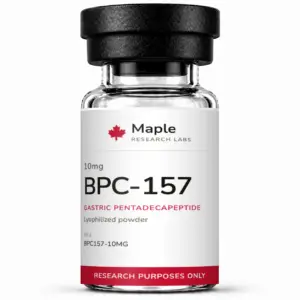
Calculate concentration using peptide mass from the vial label or COA. Avoid visual estimation to ensure reproducibility. Researchers handling commonly studied compounds such as BPC-157 should confirm batch mass against the supplied Certificate of Analysis before reconstitution.
Aliquoting and Sub-Sampling
Freeze-thaw cycles can degrade peptides. Aliquoting helps preserve stability.
- Prepare aliquots immediately after reconstitution
- Label with compound name, concentration, date, and batch number
- Create appropriately sized aliquots to avoid repeated freeze-thaw cycles
Why Handling Conditions Change the Chemistry
The handling rules above are not housekeeping. Each one maps to a specific degradation reaction that runs faster under the wrong conditions. Manning and colleagues (2010, Pharmaceutical Research 27:544-575) catalogue the main routes: deamidation of asparagine and glutamine residues, isomerisation at aspartate, oxidation of methionine, cysteine, tryptophan and histidine side chains, hydrolysis of the peptide bond, and non-covalent aggregation. Water is a reagent in most of them, which is why a lyophilized cake that has absorbed moisture from a cold vial opened in humid air begins to degrade before any solvent is added.
Freezing a reconstituted solution introduces a hazard of its own. As ice forms, the remaining liquid concentrates the solutes, and in sodium phosphate buffers the disodium salt crystallises out first. Van den Berg and Rose (1959, Archives of Biochemistry and Biophysics 81:319-329) measured the pH of sodium phosphate solutions falling by more than three units during freezing for exactly this reason. A peptide that is stable at pH 7 can spend every freeze-thaw cycle transiently below pH 4 in a concentrated brine, which is the mechanistic case for single-use aliquots over repeated thawing of one stock vial.
Two compounds in the catalogue show how specific these reactions are. Thymosin beta-4 carries a methionine at position 6, and its methionine sulfoxide degradant forms on air exposure and appears as a separate, earlier-eluting HPLC peak. Oxytocin’s single disulfide bridge makes it unusually sensitive to heat and pH, with dimerisation and deamidation products accumulating in warm solution. The general map of these routes is in our review of peptide degradation pathways, and the solvent and concentration choices that slow them are covered in the reconstitution guide.
Documentation and Record-Keeping
Inventory Records
- Batch number
- Date of receipt
- Storage location
- Quantity and aliquot details
Usage Logs
- Date used
- Quantity removed
- Remaining amount
- User information
COA Filing
Store COAs in a retrievable system and link them to batch numbers. Maintain digital backups.
Incident Documentation
Document deviations from protocol, unexpected changes, or potential quality concerns.
Quality Considerations
Visual Changes
Lyophilized peptides should appear white to off-white. Discoloration or cloudiness may indicate degradation. What a vial’s appearance can and cannot tell you is set out in our note on visible particulate inspection.
Solubility Issues
If a peptide fails to dissolve properly, investigate possible aggregation or degradation.
Stability Monitoring
For critical applications, periodic analytical testing (such as HPLC) may be necessary to confirm purity. A re-test is only meaningful against a sealed, untouched portion of the original lot, which is why laboratories keep a retention sample from each receipt.
Disposal Considerations
Dispose of expired or degraded peptides according to institutional and regulatory guidelines. Follow proper chemical waste protocols.
Conclusion
Proper handling of research peptides directly impacts research quality and reproducibility. By following structured protocols for receiving, storage, reconstitution, and documentation, laboratories can preserve compound integrity and ensure consistent experimental outcomes.
Related Research
- Research Peptide Storage and Handling Guide
- Peptide Reconstitution for Research
- How to Read a Certificate of Analysis
- Certificates of Analysis
- Browse All Research Peptides
Disclaimer: All compounds referenced in this article are intended for research purposes only. Not for human consumption. Not for diagnostic or therapeutic use. Researchers are responsible for compliance with all applicable regulations and institutional guidelines.
For peer-reviewed research on this topic, visit PubMed.
15% off your first order
Join the research list and we will email your code. New arrivals, current pricing, and research breakdowns. Unsubscribe anytime.