 Maple
Maple 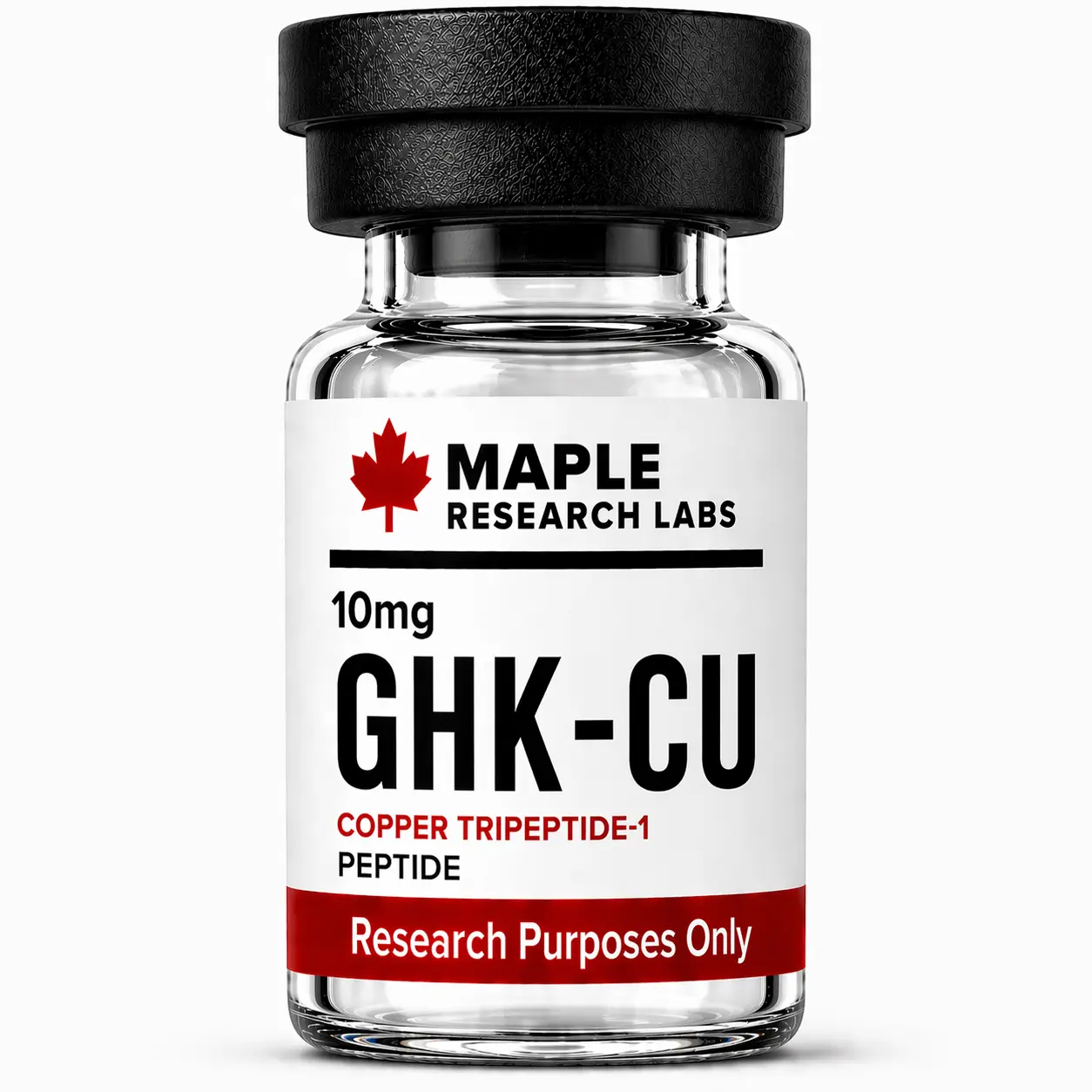
Compound: GHK-Cu
CAS Number: 49557-75-7
Molecular Formula: C14H23CuN6O4
Purity: 99.3% (HPLC verified)
Third-Party Testing: Testides Analytical (independent lab, Prague)
COA Verification: Testides.com/verify
Batch: MRL-GHK-0326
Source: Canadian manufactured
Shipping: Same-day from our BC facility
GHK-Cu peptide Canada: a naturally occurring copper-binding tripeptide (glycyl-L-histidyl-L-lysine) complexed with copper(II) ions. This research-grade compound is available from Maple Research Labs at 50mg per vial with greater than 99%+ HPLC-verified purity and batch-specific COA.
Product Specifications
- CAS Number: 49557-75-7
- Molecular Formula: C14H24CuN6O4
- Molecular Weight: 403.93 g/mol
- Purity: >99%+ (HPLC verified)
- Form: Lyophilized powder
- Quantity: 50mg per vial
GHK-Cu Peptide Canada Research Summary
GHK-Cu (copper peptide GHK) is a naturally occurring tripeptide first isolated from human plasma by Dr. Loren Pickart in 1973. The peptide consists of three amino acids (glycine-histidine-lysine) with a high affinity for copper(II) ions. GHK-Cu peptide Canada research products are widely used in dermatological and wound healing research models due to the peptide’s documented interactions with extracellular matrix components and growth factor signaling.
GHK-Cu concentrations in human plasma decrease significantly with age, a finding that has driven considerable research interest in understanding the peptide’s role in tissue remodeling. Published studies have reported plasma GHK-Cu levels of approximately 200 ng/mL at age 20, declining to approximately 80 ng/mL by age 60.
Mechanism of Action Research
Research has identified multiple biological activities associated with the GHK-Cu complex. The copper-binding tripeptide has been shown to stimulate collagen synthesis in fibroblast cell cultures, promote decorin and glycosaminoglycan production, and modulate expression of metalloproteinases (MMPs) involved in extracellular matrix remodeling in vitro.
Gene expression studies have identified over 4,000 genes modulated by GHK-Cu treatment in cell culture models. Published microarray analyses have reported effects on genes involved in anti-inflammatory responses, antioxidant defense systems, stem cell markers, and DNA repair pathways. The breadth of gene expression changes observed has been attributed to GHK-Cu’s role as a signaling molecule that interacts with multiple cellular systems simultaneously.
In preclinical wound healing models, researchers have observed that GHK-Cu promotes angiogenesis, stimulates fibroblast recruitment, and modulates the inflammatory phase of wound repair. In vitro studies have demonstrated copper-dependent effects on superoxide dismutase (SOD) activity and anti-inflammatory cytokine expression.
Preclinical Study Summary
GHK-Cu has been investigated in skin biology research, wound healing models, hair follicle studies, and bone tissue research. Published studies span several decades and include both in vitro cell culture work and in vivo animal model investigations. The peptide’s naturally occurring status and well-characterized copper-binding properties have made it one of the most extensively studied bioactive tripeptides in dermatological research.
All findings referenced are from preclinical research and in vitro studies. Researchers should consult primary literature for complete experimental details.
References
GHK-Cu Peptide Canada Quality Assurance
Verified products of GHK-Cu peptide Canada from Maple Research Labs undergoes independent third-party HPLC analysis confirming purity exceeding 99%+. Each order includes a batch-specific COA with retention time data, purity percentage, copper content verification, and mass spectrometry identity confirmation. Our quality pipeline ensures consistent copper peptide complex formation and purity across all shipments to Canadian research facilities.
Storage and Handling
Store lyophilized GHK-Cu at -20C for long-term storage. Reconstituted solutions should be stored at 2-8C. Avoid freeze-thaw cycles and exposure to direct light. The copper complex is light-sensitive.
Shipping
Ships same-day from our Canadian facility. Temperature-controlled packaging included.
Certificate of Analysis (COA)
| Testing Laboratory | Testides Analytical |
| Purity | 99.868% / 99.756% |
| Batch Number | CU100/2025-1020 |
| Analysis Date | 24 NOV 2025 |
| Task Number | #89700 |
| Verification | Verify this COA on Testides.com |
Related Research Articles
Learn more about this compound through our peer-reviewed research summaries:
- Understanding Peptide Purity: Why It Matters for Research
- Research Peptides vs Other Research Compounds
- Certificates of Analysis (COA) Documentation
- Browse All Research Peptides
For research purposes only. Not for human consumption. Not for diagnostic or therapeutic use.
Frequently Asked Questions
What is the CAS number for GHK-Cu?
The CAS registry number for GHK-Cu (Copper Peptide) is 49557-75-7. GHK-Cu is a naturally occurring copper complex of the tripeptide glycyl-L-histidyl-L-lysine.
What purity level does Maple Research Labs GHK-Cu achieve?
Current batch MRL-GHK-0326 tested at 99.3% purity by independent HPLC analysis at Testides Analytical, exceeding our 99%+ minimum threshold.
How should GHK-Cu be stored?
Store lyophilized GHK-Cu at -20C, protected from light. The copper complex is photosensitive. Once reconstituted, store at 2-8C in amber vials if possible and use within 14 days.
What research areas involve GHK-Cu?
GHK-Cu has been studied in the context of wound healing, collagen synthesis, anti-inflammatory activity, and antioxidant mechanisms. Research has identified over 4,000 genes regulated by GHK-Cu in gene expression studies.
Related Research Peptides from Maple Research
Researchers may also be interested in GLOW Blend 70MG, BPC-157 10MG, and TB-500 5MG. All products are shipped same-day from Canada with third-party purity verification.
Want more research like this?
Weekly peptide study breakdowns. No spam. Unsubscribe anytime.
Reviews
There are no reviews yet.