 Maple
Maple 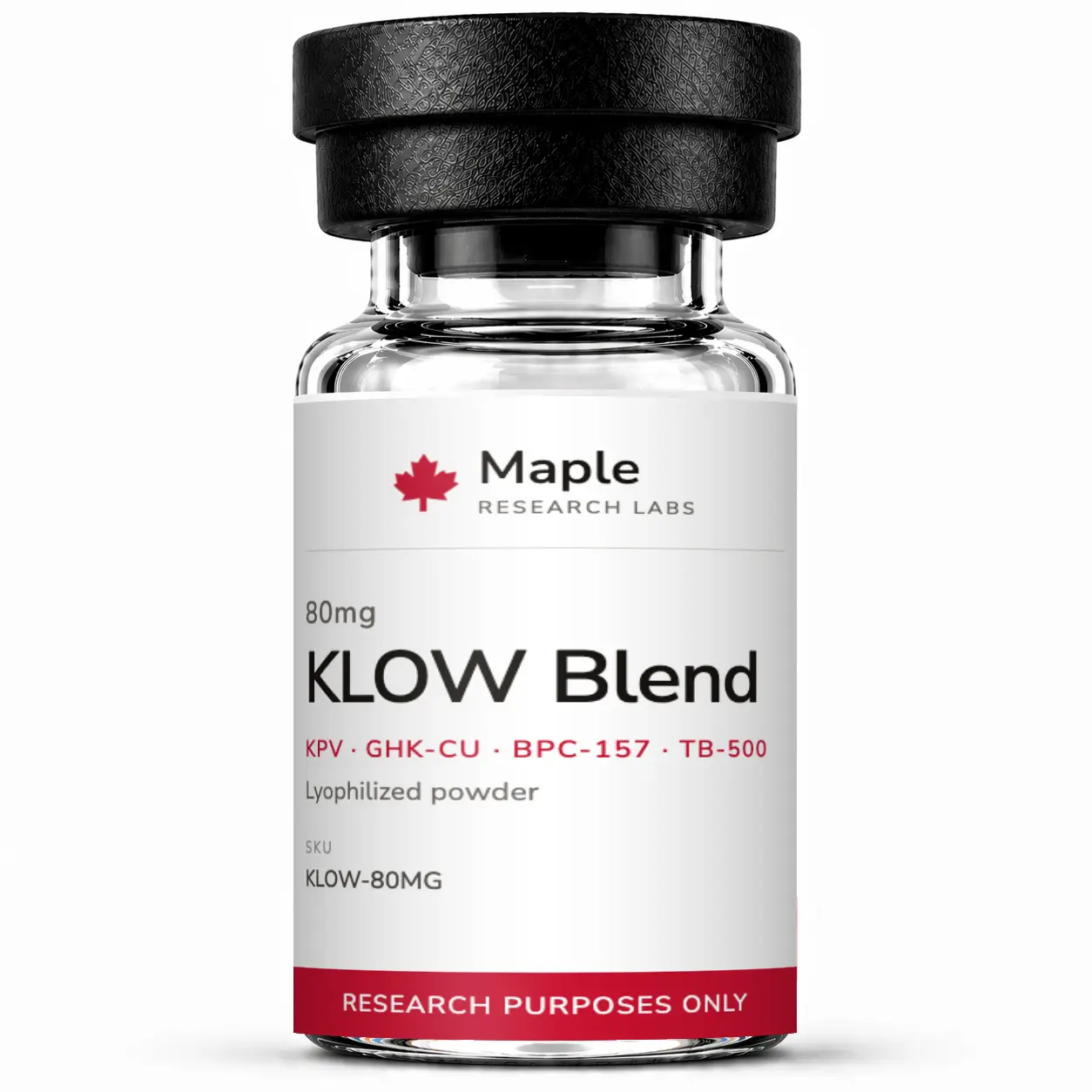
KLOW is a four-component research blend supplying KPV, BPC-157, GHK-Cu, and TB-500 at 80mg total peptide content per vial, verified at 99.29 percent purity by independent HPLC-UV analysis. Each component carries a separate preclinical literature covering inflammatory signalling, angiogenic pathways, extracellular matrix turnover, and actin dynamics. This page describes mechanism of action and published in-vitro and animal-model findings only.
Blend Composition
The four constituents were selected because their reported mechanisms sit in adjacent rather than overlapping pathways, which is the usual rationale for studying them as a combined preparation in an animal model rather than separately. Each is also available individually for researchers running single-agent controls, and the component pages carry their own batch documentation.
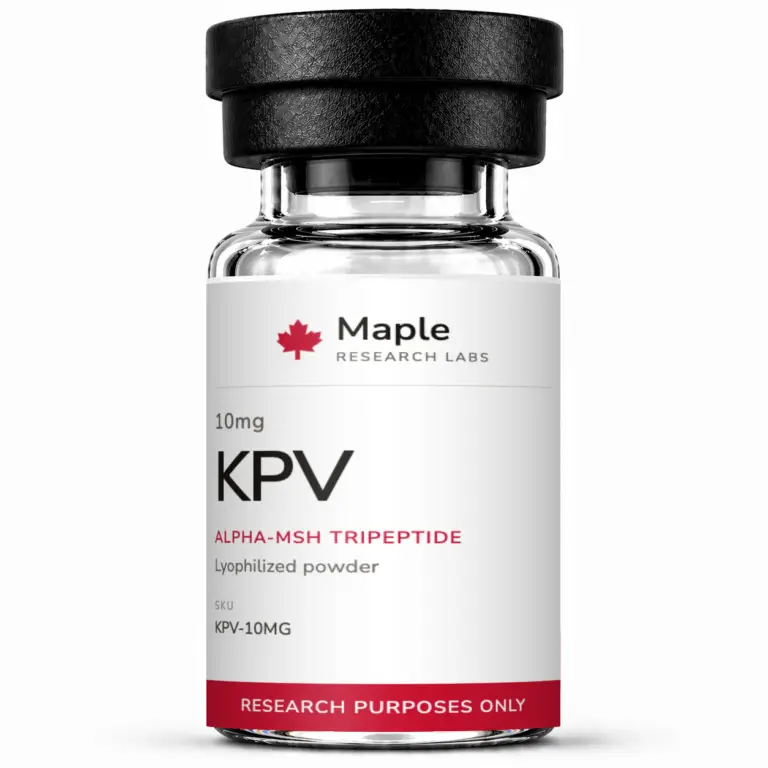
KPV is the C-terminal tripeptide of alpha-melanocyte-stimulating hormone, sequence lysine-proline-valine. In-vitro work in intestinal epithelial and immune cell lines has reported suppression of pro-inflammatory transcription factor activity, specifically NF-kappaB and AP-1 signalling, and uptake studies by Dalmasso and colleagues (2008) described transport through the oligopeptide transporter PepT1. Its reported activity appears to run independently of melanocortin receptor binding, which distinguishes it from the parent hormone. See KPV research peptide for the single-compound listing.
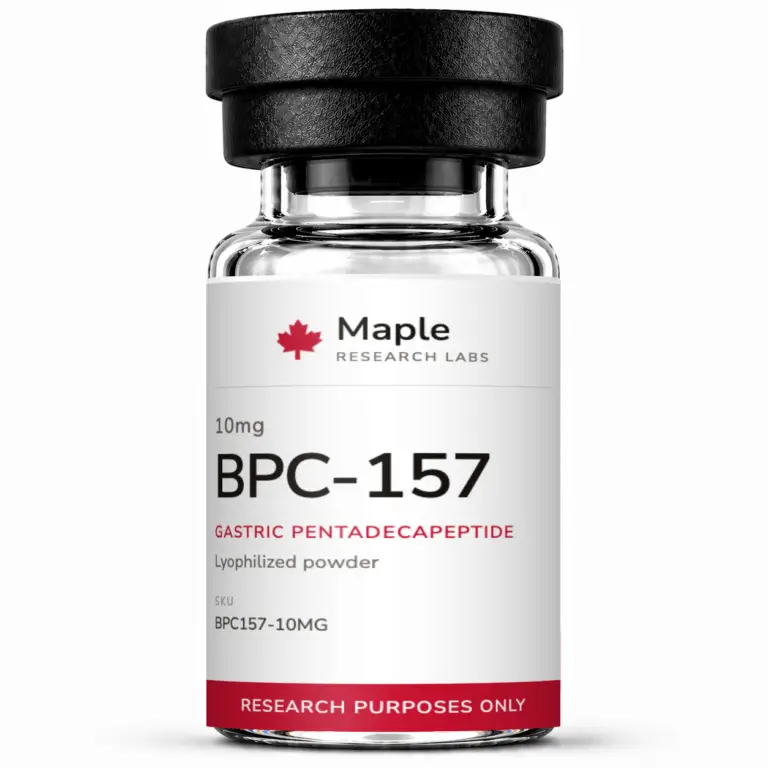
BPC-157 is a synthetic pentadecapeptide corresponding to a partial sequence of body protection compound isolated from gastric juice. Rodent studies have reported effects on angiogenic signalling through the VEGFR2-Akt-eNOS axis, and in-vitro work by Chang and colleagues (2011) described increased tendon fibroblast outgrowth and migration. The preclinical record is summarized on our BPC-157 research overview, with the standalone compound at BPC-157 research peptide.
GHK-Cu is the copper-binding tripeptide glycyl-L-histidyl-L-lysine, originally isolated from human plasma by Pickart. Fibroblast culture studies have reported modulation of collagen and glycosaminoglycan synthesis, and gene expression profiling reviewed by Pickart and Margolina (2018) described broad transcriptional effects tied to the copper complex rather than the free peptide. Further detail sits on the GHK-Cu research page and the GHK-Cu research peptide listing.
TB-500 is a synthetic fragment corresponding to the actin-binding region of thymosin beta-4. The parent protein sequesters G-actin and is studied for its role in cell migration and cytoskeletal remodelling, and animal-model literature has examined those pathways in tissue repair contexts. Background is covered on the TB-500 research page, and a two-component comparison is available at BPC-157 vs TB-500.
Analytical Considerations for Blends
A multi-component vial raises verification questions a single-compound vial does not. HPLC purity for a blend describes the combined peptide fraction relative to other peptide-related species, so it does not by itself establish the ratio between the four constituents. Content and fill accuracy testing addresses the total mass question, and the batch record below reports 83.53mg measured against an 80.00mg expected fill. Researchers designing experiments around a blend should read the purity figure and the content figure together rather than treating either as sufficient. Our peptide purity testing methods page explains what each analytical technique can and cannot resolve.
Storage and Handling
Supplied lyophilized. Store the sealed vial at -20 degrees Celsius, protected from light and moisture. Allow the vial to reach room temperature before opening to limit condensation onto the powder, since residual moisture is a documented driver of solid-state peptide degradation. Handle under standard laboratory conditions.
Certificate of Analysis (COA)
| Testing Laboratory | Testides (testides.com) |
| Report Number | DBAV-KLOW-80-062726 |
| Lot Number | 5677 |
| Purity (HPLC-UV) | 99.29% |
| Content / Fill Accuracy | 83.53mg measured / 80.00mg expected (104.4%) |
| Date Tested | July 16, 2026 |
| Download COA | Download Full COA (PDF) |
For research purposes only. Not for human consumption. Not for diagnostic or therapeutic use.
Want more research like this?
Weekly peptide study breakdowns. No spam. Unsubscribe anytime.
Reviews
There are no reviews yet.