 Maple
Maple 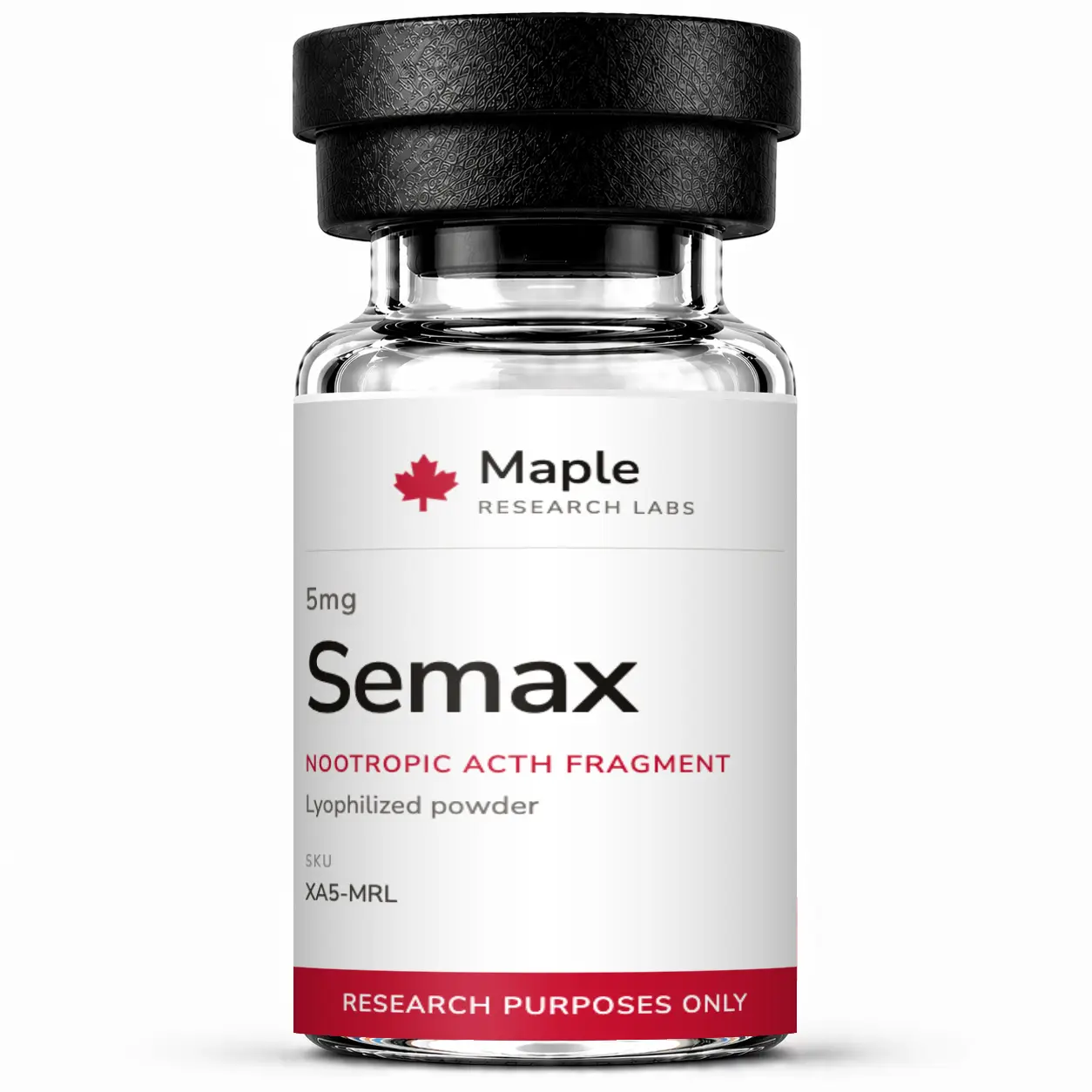
Compound: Semax
CAS Number: 80714-61-0
Molecular Formula: C37H51N9O10S
Purity: 99.90% (HPLC-UV verified)
Third-Party Testing: Testides Analytical (independent lab, Toronto)
COA Download: View Full COA (PDF)
Report: DBAV-SEMAX-10-062226
Lot Number: 5813
Source: Canadian manufactured
Shipping: Same-day from our BC facility
Semax peptide Canada: a synthetic heptapeptide analog of adrenocorticotropic hormone (ACTH) fragment 4-10. Developed at the Institute of Molecular Genetics of the Russian Academy of Sciences, semax is a research-grade neuropeptide available from Maple Research Labs with greater than 99%+ HPLC-verified purity and batch-specific COA.
Product Specifications
- Sequence: Met-Glu-His-Phe-Pro-Gly-Pro (ACTH(4-10) with Pro-Gly-Pro extension)
- Base Fragment: ACTH(4-10)
- Molecular Weight: Approximately 813 Da
- Purity: >99%+ (HPLC verified)
- Form: Lyophilized powder
- Quantity: 5mg per vial
Semax Peptide Canada Research Summary
Semax is a synthetic analog of the ACTH(4-10) fragment, a seven-amino acid sequence derived from adrenocorticotropic hormone that lacks the steroidogenic activity of the full-length hormone. The semax peptide Canada research product contains the ACTH(4-10) core sequence (Met-Glu-His-Phe-Pro-Gly-Pro) with the same Pro-Gly-Pro C-terminal extension used in selank, designed to improve metabolic stability while preserving the neuropeptide activities of the ACTH fragment.
The ACTH(4-10) fragment was identified in early research as the minimal sequence retaining neurotrophic activity from the parent ACTH molecule, without the adrenal-stimulating properties of the full 39-amino acid hormone. This separation of neurotrophic from endocrine activity established the foundation for semax development as a research neuropeptide.
Mechanism of Action Research
Published research has examined semax’s interactions with neurotrophic factor systems, particularly BDNF (brain-derived neurotrophic factor) and NGF (nerve growth factor) signaling. Studies in rodent models have reported that semax administration modulates BDNF and trkB receptor expression in hippocampal and cortical brain regions. Transcriptomic analyses have identified changes in gene expression patterns associated with neuroplasticity, neurotransmitter metabolism, and immune modulation.
Research has also investigated semax’s effects on monoamine neurotransmitter systems. Published studies have reported modulation of dopaminergic and serotonergic signaling in specific brain regions, with effects on DOPAC/dopamine and 5-HIAA/serotonin metabolite ratios in rodent brain tissue. These neurochemical observations have driven interest in semax as a research tool for studying neuropeptide-neurotransmitter interactions.
Gene expression profiling studies have identified several hundred genes modulated by semax in rodent brain tissue, with prominent clusters in categories including neurotransmitter signaling, immune response, and vascular function. The breadth of transcriptomic changes suggests that semax engages multiple signaling pathways rather than acting through a single receptor system.
Preclinical Study Summary
Semax has been investigated in cognitive behavioral paradigms (Morris water maze, passive avoidance), neurovascular research models, and neuroinflammation studies in rodents. Published research has also examined its immunomodulatory properties, including effects on cytokine expression and immune cell function. The peptide has been the subject of extensive preclinical investigation, particularly by research groups in Russia and Eastern Europe.
All findings are from preclinical animal and in vitro studies. No therapeutic claims are made.
References
Semax Peptide Canada Quality Assurance
Verified products of semax peptide Canada from Maple Research Labs undergoes independent third-party HPLC analysis confirming purity exceeding 99%+. Each order includes a batch-specific COA with retention time data, purity percentage, and mass spectrometry verification. The ACTH(4-10) analog includes a methionine residue requiring oxidation state verification, confirmed by our third-party laboratory on verified products.
Storage and Handling
Store lyophilized at -20C. Reconstituted at 2-8C, use within 14 days. The methionine residue is oxidation-sensitive; store under inert atmosphere when possible.
Shipping
Ships same-day from our Canadian facility. Temperature-controlled packaging included.
Certificate of Analysis (COA)
| Testing Laboratory | Testides (testides.com) |
| Report Number | DBAV-SEMAX-10-062226 |
| Lot Number | 5813 |
| Purity (HPLC-UV) | 99.90% |
| Content / Fill Accuracy | 9.79mg measured / 10.00mg expected (97.9%) |
| Date Tested | July 4, 2026 |
| Download COA | Download Full COA (PDF) |
For research purposes only. Not for human consumption. Not for diagnostic or therapeutic use.
Related Research Articles
- Semax vs Selank: Neuropeptide Research Comparison
- Research Peptides vs Other Research Compounds
- Certificates of Analysis (COA) Documentation
- Browse All Research Peptides
Frequently Asked Questions
What is the CAS number for Semax?
The CAS registry number for Semax is 80714-61-0. It is a synthetic peptide derived from ACTH(4-7).
How is Semax purity verified?
Independent HPLC at Testides Analytical. Batch 5813 tested at 99.90% purity.
What is Semax studied for in research?
Semax has been investigated for neuroprotective and cognitive-enhancing properties in animal models, with research focusing on BDNF upregulation and cerebrovascular effects.
Related Research Peptides from Maple Research
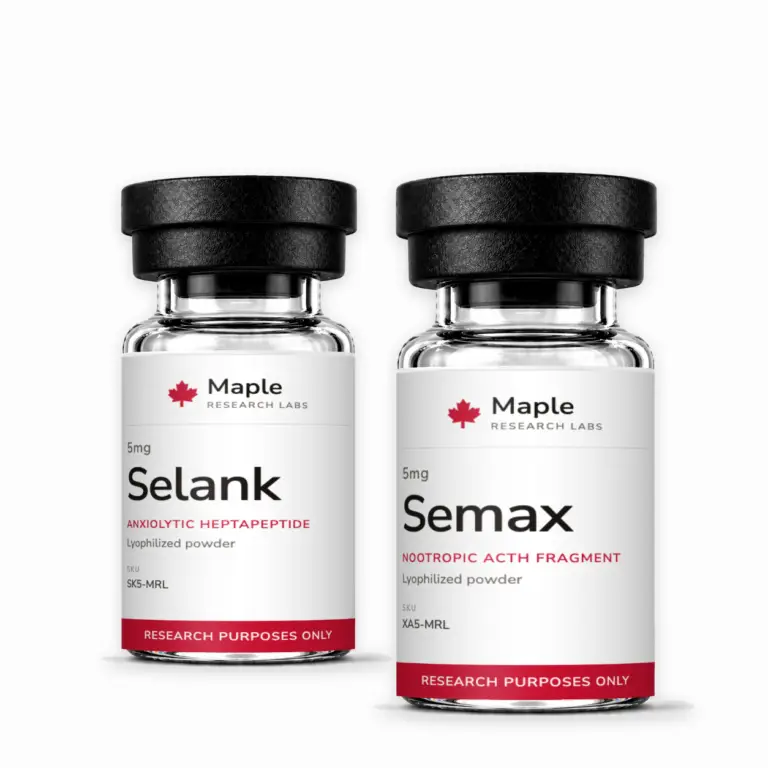
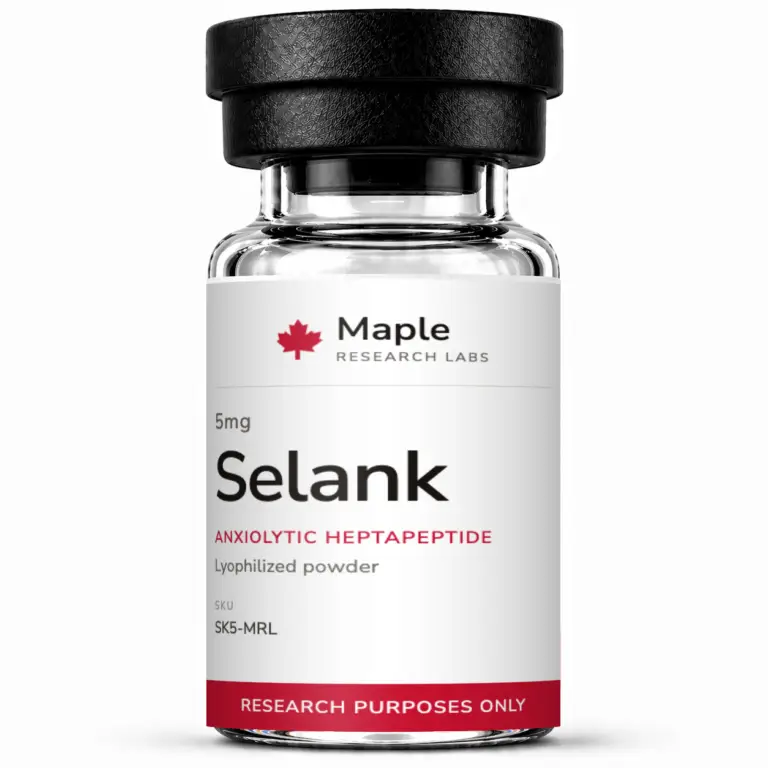
Researchers may also be interested in Selank, BPC-157 10MG, and bacteriostatic water. All products are shipped same-day from Canada with third-party purity verification.
Want more research like this?
Weekly peptide study breakdowns. No spam. Unsubscribe anytime.
Reviews
There are no reviews yet.